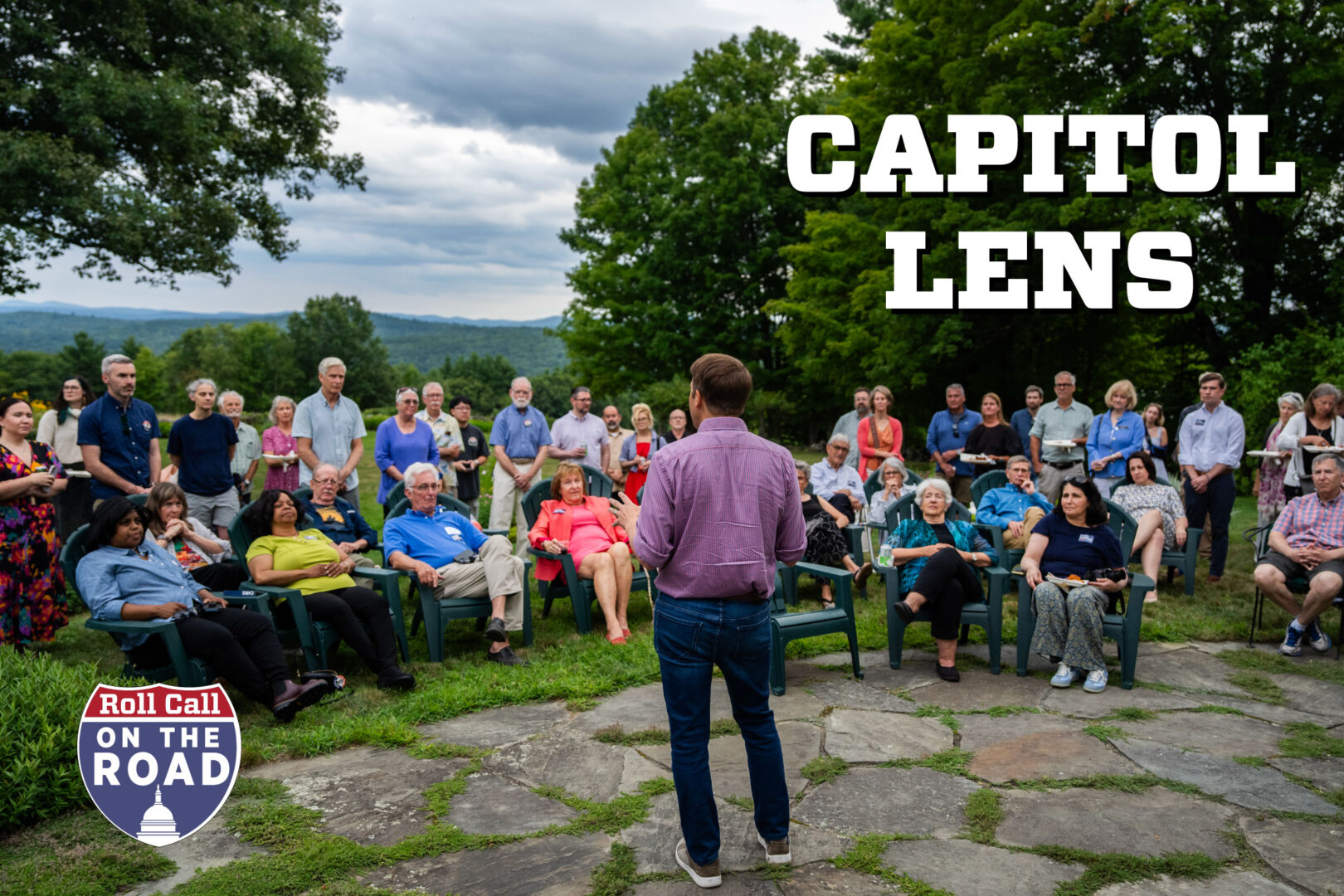
# Democratic Candidates Crisscross New England in Pursuit of Primary Voters
Tom Williams, CQ Roll Call's senior photographer, recently documented Democratic primary campaigning across New England, capturing the ground-level intensity of candidates competing for delegates in one of the nation's most politically engaged regions.
The New England primary circuit represents a pivotal early test for Democratic hopefuls. The region encompasses Massachusetts, Connecticut, Rhode Island, Vermont, and New Hampshire, each with distinct political dynamics. New Hampshire's first-in-the-nation primary status gives it outsized influence in shaping the broader race. Massachusetts, home to multiple senators and a large delegate pool, operates as another heavyweight contest. Vermont's progressive electorate and Connecticut's suburban swing voters create different strategic imperatives for each candidate.
Candidates typically invest heavily in New England early. The region's proximity to media markets in Boston and New York amplifies campaign messaging. Dense populations in coastal areas allow candidates to reach thousands of voters through town halls, diners, and community events. Local media coverage provides cost-effective exposure compared to expensive television buys in other parts of the country.
Williams' photography documents the retail politics dimension of primary campaigns. Candidates shake hands, pose for selfies, and address small gatherings in gymnasiums and VFW halls. These images capture what political operatives call "earned media" moments. A compelling photograph of a candidate connecting with voters can circulate through social media and news outlets, extending reach beyond the immediate event.
The New England circuit shapes candidate narratives early in cycles. Strong performances here build momentum. Weak showings force candidates to reassess strategy or withdraw entirely. Media outlets use New England results to winnow the field, focusing coverage on frontrunners while marginalizing those who underperform.
Photography serves a distinct function in political coverage. Still images freeze moments that convey authenticity or, conversely, awkwardness. A candidate's genuine engagement with voters tells one story. A forced smile or distant demeanor tells another. Williams' work provides visual documentation of how candidates conduct themselves away from the debate stage.
CQ Roll Call's coverage extends beyond Williams' photography through its "Roll Call on the Road" reporting initiative, which provides written analysis of primary dynamics, candidate positioning, and delegate math. This combination of visual and written reporting gives readers comprehensive understanding of campaign activity.
New England primaries have historically filtered political movements into the mainstream. Barack Obama's 2008 campaign gained traction partly through strong early primary performance. Bernie Sanders leveraged Vermont's progressive base and neighboring New England support into national viability in 2016 and 2020. Elizabeth Warren represented Massachusetts in the Senate before running for president.
The region's voter composition includes college-educated professionals, union members, and suburban moderates. Candidates tailor messaging accordingly. Progressive candidates emphasize climate action and healthcare expansion. Moderate candidates highlight electability and pragmatism.
For political photographers and reporters, New England campaigns require different approach than later contests. Iowa and South Carolina feature more concentrated campaign infrastructure. New England's density creates logistical challenges but also enables efficient candidate movement across multiple events daily.
Williams' assignment reflects Roll Call's commitment to on-the-ground political reporting. Photography transforms abstract campaign data into human narratives, showing voters' faces, candidates' gestures, and the everyday mechanics of winning primary votes across America's most politically active region.