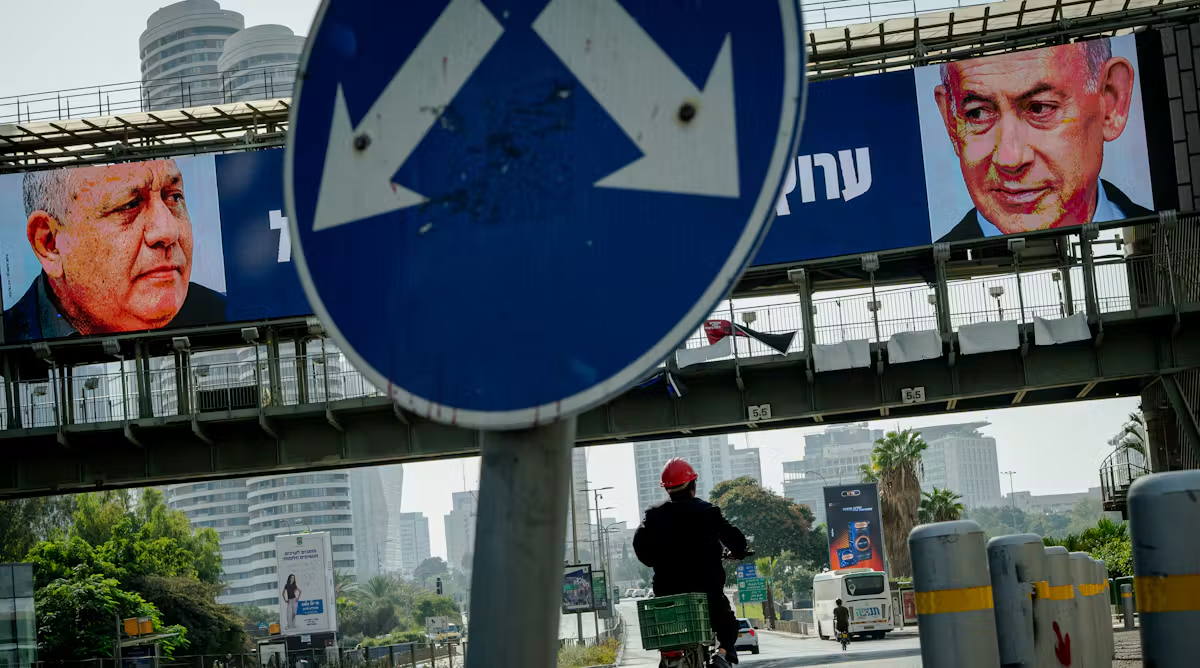
Israel's Oct. 27, 2026 election produced a 77.7% turnout, the highest in more than two decades, but left the country's political future uncertain. Nearly all votes counted show no clear path to a government, with coalition building now determining who leads the nation.
Prime Minister Benjamin Netanyahu's five-party right-wing and religious coalition lost decisively. Those five parties entered the election with 68 seats in the 120-seat parliament and will hold only 53 seats in the next one. Netanyahu's Likud party, though still the largest, lost six seats and saw its share of the national vote decline.
Arab-majority parties performed strongly, increasing their representation by nine seats to a historic high of 19 combined. This reflected massive turnout among Arab voters and some increased Jewish support for these parties.
The opposition Change Bloc led by Gadi Eisenkot and his Yashar party fared worse than preelection polls suggested. Eisenkot's Yashar won a projected 21 seats versus Likud's 26, and the Change Bloc reached only 48 seats, far short of a majority.
Israel's president, Isaac Herzog, will decide who gets first opportunity to form a coalition. Eisenkot appears likely to receive this chance but faces a difficult path. His only real option would be a minority government dependent on support from Arab-majority parties, though some Change Bloc members oppose this. If Eisenkot fails, Netanyahu could attempt to recruit defectors from the Change Bloc or propose a "national unity" government with a rotating leader. Media reports suggest the Trump administration favors a national unity government.
Despite the bloc's electoral gains, Arab-majority parties are unlikely to be formal coalition members, though this happened once before in 2021-22 with the United Arab List.