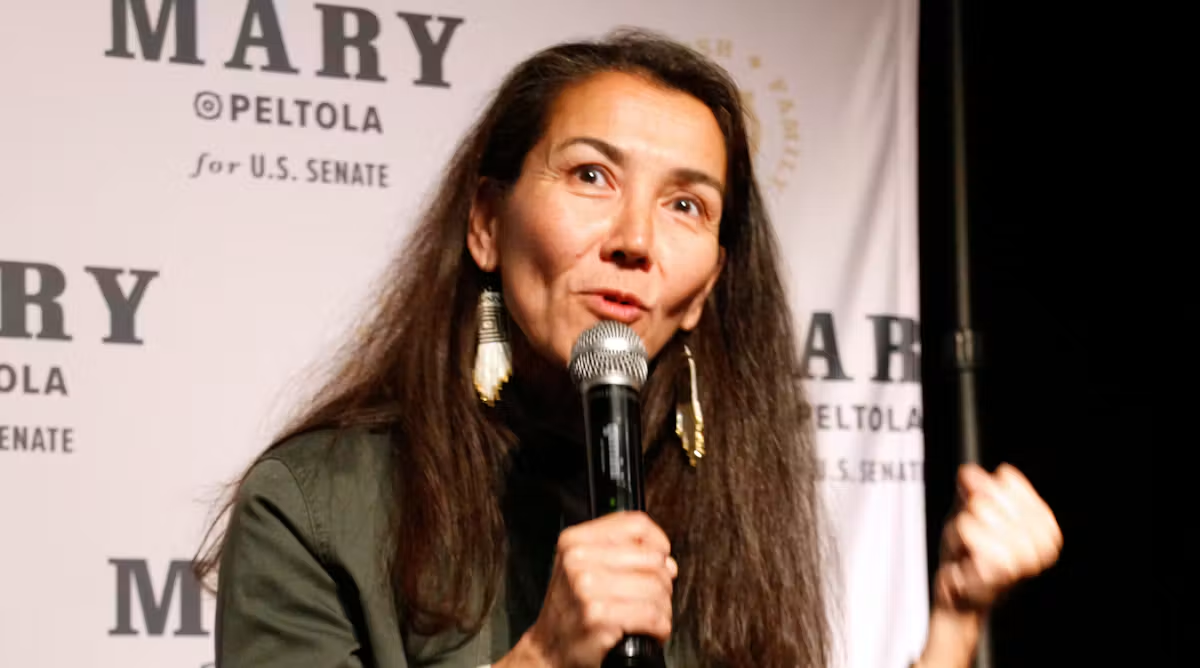
The New York Times reported that people linked to Alaska Democrat Mary Peltola's Senate campaign recruited a candidate whose name nearly matches incumbent Republican Sen. Dan Sullivan, allegedly to siphon votes from Sullivan and help Peltola win.
The tactic has roots in American politics dating back to the 1800s. For most of that century, when parties printed their own ballots, rival names could be added to ballots to divert votes. After government-printed ballots became widespread by the 1890s, the practice shifted to recruiting candidates with similar or identical names.
In John F. Kennedy's 1946 congressional primary, an aide reportedly paid a janitor named Joseph Russo to enter the race against Kennedy's opponent, also named Joseph Russo. Kennedy received more votes than the two Russos combined.
Some spoiler candidates aim not to win votes but to amplify a message. In a 1978 South Carolina House race, an independent candidate named Don Sprouse declared the Democratic nominee, Jewish refugee Max Heller, "unfit for office" and "not as qualified to represent the Christian people." Sprouse received only 1,693 votes, but Heller lost. Campbell, the Republican nominee, condemned the remarks, though allegations later surfaced that Sprouse was a stalking horse for Campbell.
Legal remedies have proven limited. In a 2010 Michigan case, two Democratic officials put candidates on ballots under fake Tea Party labels without the candidates' knowledge. The county party chair and operations director were charged with perjury and forgery, but the crime centered on forged signatures, not the spoiler strategy itself.
Alaska's rules make recruiting spoiler candidates simple. There is no petition requirement, only a $100 fee. Daniel J. Sullivan, a schoolteacher, filed as a Republican in the Senate race three days before the deadline. State officials tried to bar him, but in June a judge ruled nothing in Alaska law prevented him from appearing on the ballot. The state Supreme Court agreed. The state Division of Elections then listed Sen. Dan S. Sullivan as the incumbent Republican and left Daniel J. Sullivan without a party designation.
Washington State stands as an outlier, making it a felony to run under a rival's surname if intended to confuse voters. In 2024, when two Bob Fergusons were recruited by conservative activist Glen Morgan to run against state Attorney General Bob Ferguson, both dropped out under threat of prosecution.
Alaska has no comparable law. The Supreme Court's 1995 decision in U.S. Term Limits v. Thornton bars states from adding their own qualifications for Congress, leaving unclear whether such laws could apply to federal elections.
Campaign finance crimes offer the primary legal pathway. In 2020, a Miami political operative was convicted of three felonies for recruiting and paying a decoy candidate with the same surname as a Democratic incumbent. In another Florida case, a local Republican Party chair was convicted in a scheme to plant a progressive alternative to siphon votes.
Regulating candidate recruitment based on intent would wade into First Amendment questions about why people run for office and would be constitutionally dangerous. The solution lies not in laws but in voter attention. As newspapers advised in 1860: "Watch your tickets on election day."