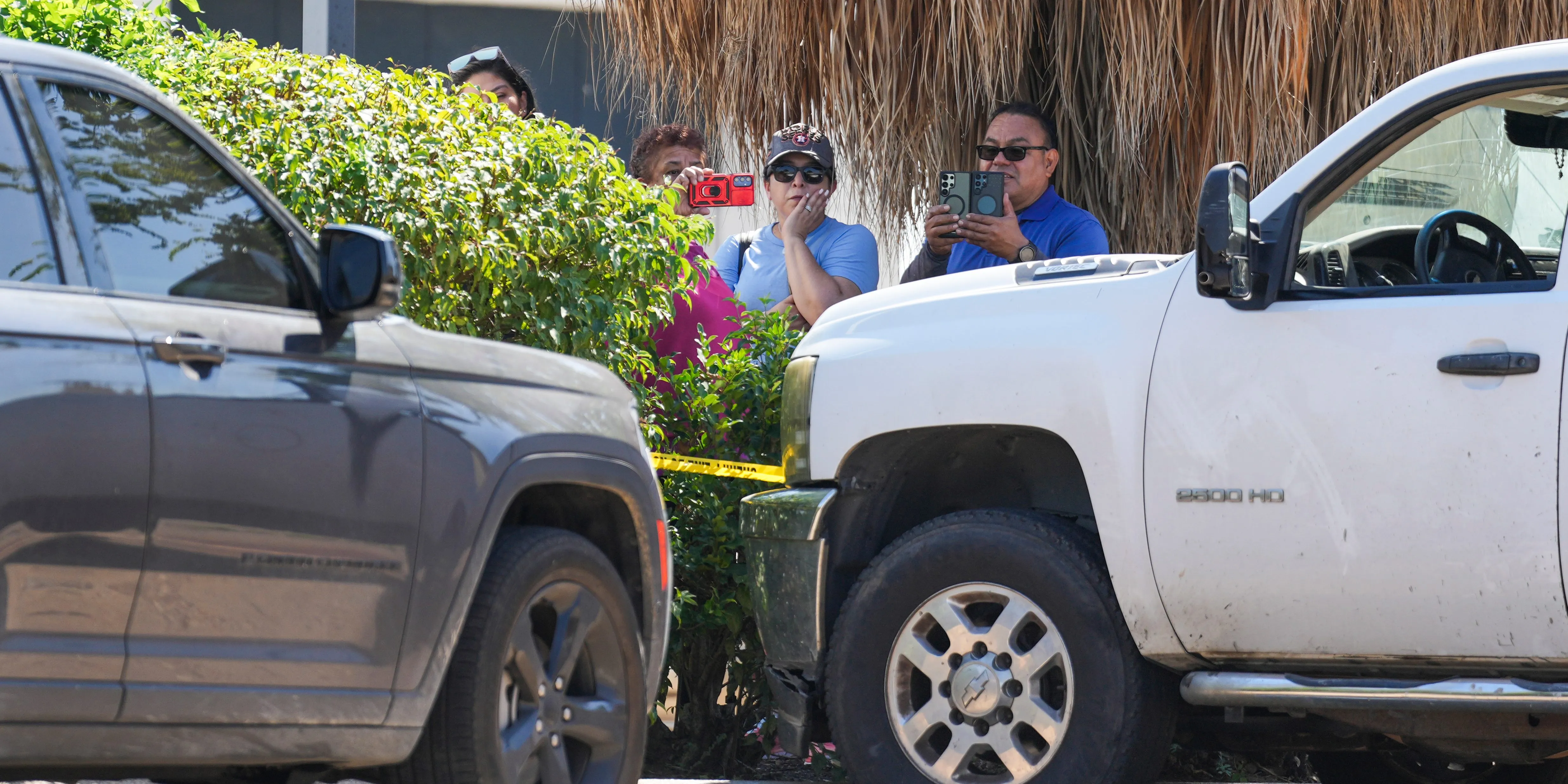
A Harris County grand jury charged an ICE officer with assault with a deadly weapon last week after he struck Miguel Parra Hernandez, a Mexican national, with an unmarked government vehicle during a foot pursuit. Surveillance footage showed Hernandez running away from the car moments before impact, contradicting the Department of Homeland Security's claim that he ran in front of the vehicle. An attorney for the ICE officer denied the assault charge.
The Intercept reviewed two dozen cases of ICE using vehicles against civilians through what federal agents call "offensive driving techniques." These include ramming cars, brake-checking observers, and driving into civilians. In Long Beach, California, an unmarked ICE vehicle struck a bicycle ridden by Ricardo Gonzalez, a U.S. citizen, while traveling the wrong way down a one-way street. Video from the New York Times showed the vehicle swerving into the bicycle, though the government said Gonzalez was not struck. In Woodland, California, an unmarked Chevy Tahoe accelerated toward Antonio Moreida as he documented ICE activity. The vehicle hit him, knocking him to the ground, and did not stop. The Department of Homeland Security said Moreida jumped onto the hood, but video contradicted this account. Local police and the mayor publicly disputed the agency's version.
Leo Martinez, a volunteer monitoring ICE activity with VC Defensa in Ventura County, California, was rammed twice by unmarked government vehicles. In October, one vehicle rammed his pickup truck. In March, three vehicles rammed his car as he tried to reverse away. Federal agents broke his window and dragged him out. He was hospitalized both times and released without charge.
ICE agents frequently use brake-checks against volunteers following their vehicles, according to VC Defensa members. Brake-checking is illegal in all 50 states under reckless driving and anti-road-rage laws. VC Defensa volunteers maintain a distance of two to three car lengths because federal agents brake-check so often. The damage to these unmarked vehicles is sometimes severe enough that volunteers identify them by their body damage.
Customs and Border Protection, another Department of Homeland Security agency, expanded its agents' discretion to use offensive driving techniques in 2025. A 2023 CBP pursuit policy largely prohibited boxing in vehicles or making contact with moving vehicles. A partially redacted 2025 directive gives officers broader discretion to use offensive driving techniques and ignore traffic laws.
Hannah Stauss, co-director of Hands Off NYC, said "Vehicles are another tool ICE agents are using with unchecked force, just like their guns, Tasers, and pepper spray."
A Department of Homeland Security spokesperson said ICE was instituting additional training on crowd control measures, high-risk vehicle stops, and medical training. The spokesperson did not respond specifically to allegations about Parra Hernandez, denied that Gonzalez was struck, and blamed Moreida for standing in the roadway.