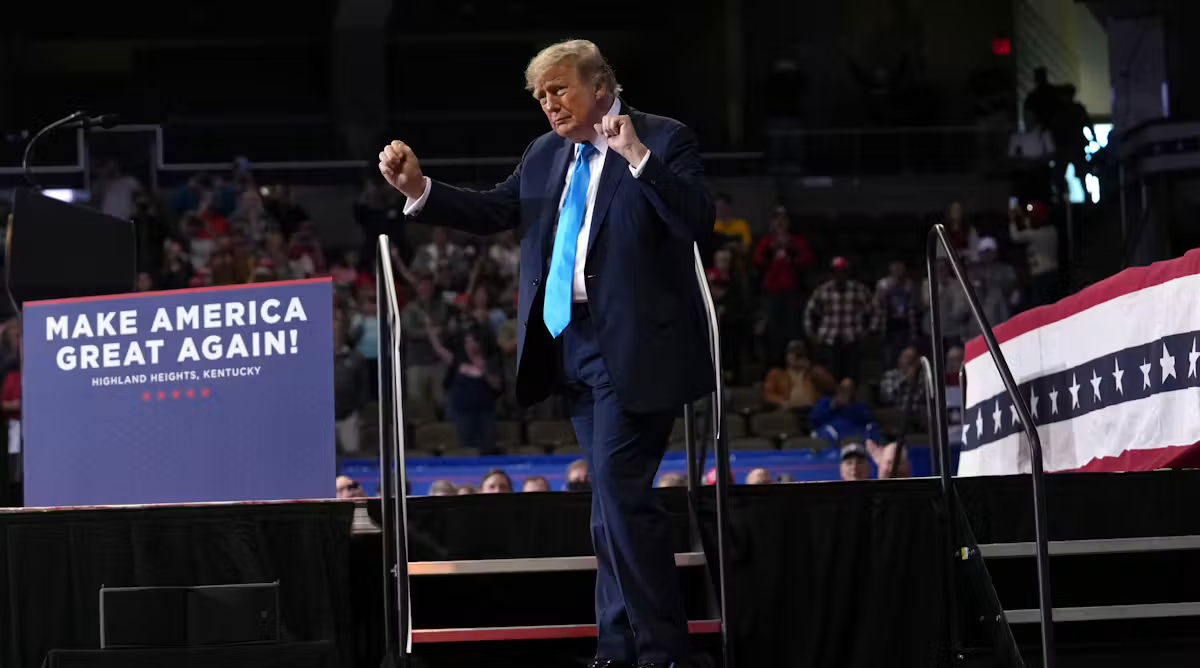
President Donald Trump promised to give every U.S. citizen $5,000 if Republicans maintain majorities in the House and Senate after the November 2026 midterm elections. The pledge stands apart from Trump's other campaign promises because it ties a cash payment directly to an electoral outcome, raising legal concerns about vote buying.
Trump has not rescinded the idea, which could cost over $1 trillion. Congressional approval would be required for implementation, but Republican legislators have not acted on it.
A political scientist who studied vote-buying efforts across 57 elections in 10 countries found that cash-for-votes campaigns have had no detectable influence on average. Vote buying dates to ancient Rome and was common in American political machines through the mid-20th century in cities like New York and Chicago, before institutional reforms ended the practice.
Research identifies three reasons vote buying typically fails. First, strong partisan identification causes voters to interpret gifts as manipulation rather than care. In Mexico in 2018, voters stripped two vote brokers down to their underwear and painted them with their party's color in response to a 500-peso vote-buying attempt.
Second, competitive elections make it hard for parties to identify voters worth targeting. Weakly opposed voters who might trade their vote are also most susceptible to standard campaigning, making them unreliable targets. Third, the secret ballot allows voters to escape their cash-for-votes commitments and vote their sincere preferences anyway, particularly when poll watchers from opposing parties are present to assure ballot secrecy.
Strong partisanship in the U.S. electorate makes Trump's offer unlikely to succeed. Committed Republicans do not need payment, while committed Democrats will view the offer as corrupting politics itself. The promise to pay everyone creates a "free-rider problem" where less committed voters might expect payment regardless of their own vote choice if others switch to Republicans.