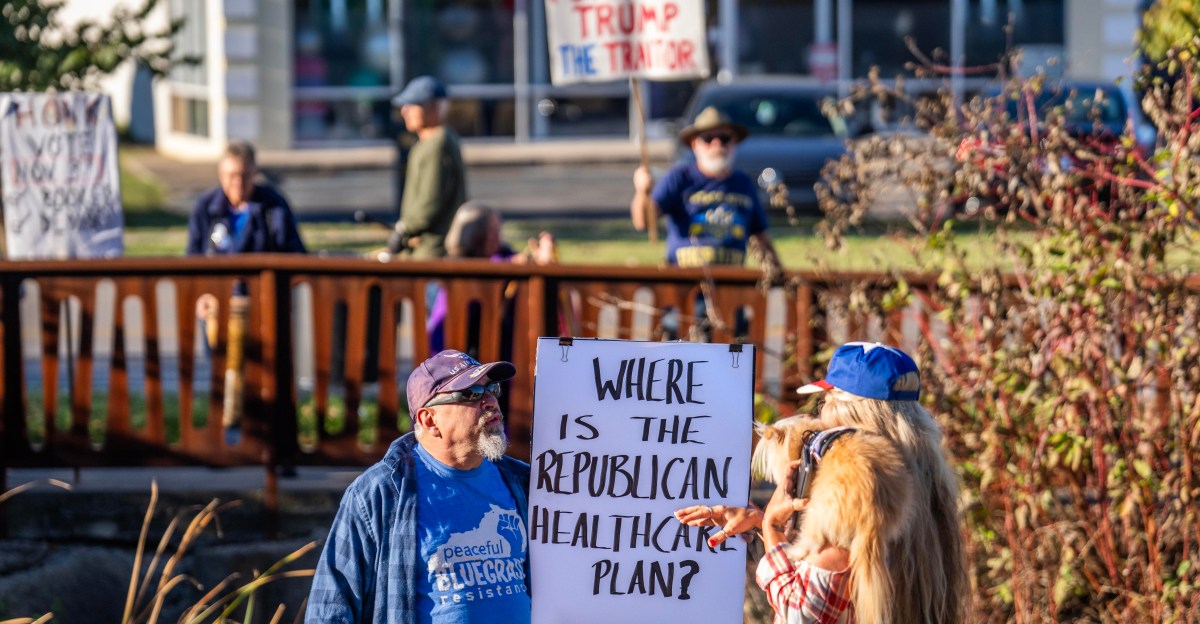
Republicans are confronting voter backlash over Medicaid cuts they approved last year, less than a week before the 2026 midterms. The cuts, part of the One Big Beautiful Bill Act, reduce Medicaid by roughly $1 trillion over the next decade through new work requirements and eligibility checks. The Congressional Budget Office projects the cuts will leave more than 7 million Americans without insurance by 2034.
Republicans designed the cuts to take effect in 2027, after the midterms. But damage is appearing early. Paired with reductions in tax credits for ACA insurance and rising employee premiums, the cuts have collided with voter concerns about living costs. A KFF poll found healthcare outranked food, housing, and utilities as a top concern, with nearly half of voters calling it "extremely important" for candidates to discuss. An Associated Press and KFF survey of rural voters found twice as many said Trump administration healthcare policies hurt their community as said they helped.
Republicans attempted to rebrand the bill as the "Working Families Tax Cuts," but Politico reported voters largely ignored the new name. Fox News found Democrats held a 22-point lead on voter trust to handle healthcare.
Democrats placed healthcare at the center of their closing argument. The Cook Political Report's Battleground Issue Tracker found Democrats spent more than $215 million on healthcare than any other issue across competitive House and Senate races. Democrats ran ads on reversing Medicaid cuts, and outside liberal groups conducted an 8,000-mile bus tour through 36 cities.
The cuts offset costs for extending Trump's first-term tax cuts and new tax provisions while funding ICE. Republicans cited a $50 billion rural health fund in the bill as their main defense. Maine Republican Sen. Susan Collins, who voted to allow the bill to reach the Senate floor but against final passage, emphasized this fund in a debate. Her Democratic challenger Troy Jackson countered that the fund does not cover what Mainers will lose overall.
Medical institutions are already responding. MercyOne Clinton Medical Center in Iowa ended labor and delivery services this year, citing decreased Medicaid funding.
Republicans deployed a second defense, claiming there is no actual cut. GOP Rep. David Valadao of California said the savings come from cracking down on waste, fraud, and abuse. But this argument rests on a technicality: the law does not reduce benefits for those who stay enrolled, yet the roughly $1 trillion in savings comes almost entirely from people losing coverage. When Arkansas used an 80-hour-a-month work requirement in 2018, more than 18,000 people lost insurance within months, mostly because they didn't know about changes or couldn't handle new paperwork.
Nebraska, the only state enforcing new Medicaid work requirements before the federal deadline, provides a preview. The state began enforcement in July, and more than 1,000 residents have already lost coverage, according to the Washington Sun. Republican Sen. Pete Ricketts voted for the bill and is now tied with independent Dan Osborn in a state Trump carried easily.
The rest of the country will face new requirements beginning in January. Adults covered under Medicaid expansion must prove every six months they work, volunteer, or attend classes at least 80 hours monthly, or qualify for an exception.
Before voting for the bill, some Republicans warned voters would reject Medicaid cuts. Polling found 71 percent of voters who backed Trump also opposed cutting the federal health insurance program. Missouri Sen. Josh Hawley said months before his vote that cutting Medicaid would be "both morally wrong and politically suicidal." Trump told fellow Republicans to avoid going "too crazy" and to "REMEMBER, you still have to get reelected."