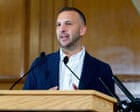
The Green Party of England and Wales faces internal pressure to clarify its position on a controversial motion that would declare "Zionism is racism" as official party policy. The proposal topped a members' vote on policy motions for the party's October conference in Brighton, making its debate at that gathering nearly certain.
Zack Polanski, who leads the Greens in England and Wales, has declined to comment publicly on the motion. Party members and observers worry that adopting such a policy could damage relationships with Jewish supporters and create divisions within the organization.
The motion's emergence reflects deeper tensions within the Green Party over Israel-Palestine issues. Polanski faces pressure to articulate a clear position before the conference debate, which will likely draw significant attention from both party activists and external critics. His silence so far has left uncertainty about whether Green leadership will support, oppose, or attempt to modify the proposal.
The timing matters strategically. The Greens have gained parliamentary representation in recent years, with four MPs currently in Westminster. Any major policy pronouncement on Israel-Palestine carries implications for the party's broader credibility and electoral viability. Party leaders must balance the activist base that prioritizes Palestinian solidarity against concerns about broadening the party's appeal to mainstream voters and maintaining Jewish community engagement.
The distinction between criticism of Israeli government policies and declaring Zionism itself racist represents a line that separates mainstream political discourse from more radical positioning. Most major UK parties, including Labour, have avoided adopting such language officially, though individual members occasionally voice such views. Labour leader Keir Starmer faced sustained pressure from pro-Palestinian activists over party policy on Israel but has not endorsed the "Zionism is racism" framing.
The Guardian's reporting indicates that some within the Green Party view this motion as potentially damaging to the organization's standing. Jewish groups and pro-Israel advocates would likely respond sharply to adoption of such a policy. Conversely, the motion's placement at the top of member votes suggests substantial grassroots support within Green circles for this position.
Polanski's lack of public engagement on the issue creates a leadership vacuum. Party conference delegates will debate the motion regardless of his position, but his explicit stance would shape the conversation and potentially influence voting. Green leadership typically attempts to guide major policy decisions while maintaining the appearance of democratic member involvement.
The October conference will test whether Green Party leadership can manage internal divisions on Middle East policy or whether the organization will move toward more radical positioning on Israel-Palestine issues. How Polanski and other senior figures approach this debate will determine whether the party reinforces its image as a progressive voice on social justice issues or risks alienating segments of the broader electorate it needs to build long-term political strength.
The conference debate will likely attract media scrutiny and responses from Jewish organizations, pro-Israel groups, and Palestinian solidarity networks. The outcome could establish new fault lines within British progressive politics around how far parties are willing to go in their language and framing of the Israeli-Palestinian conflict.