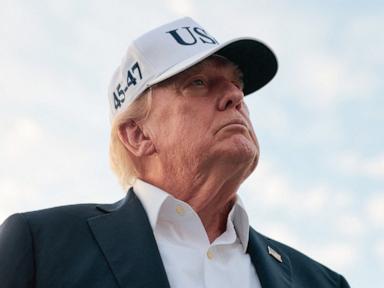
President Donald Trump attacked the Supreme Court on Monday after the justices declined to hear his challenge to mail-in voting practices ahead of the 2022 midterm elections. The decision left in place voting procedures that allow expanded access to absentee ballots in multiple states.
Trump had sought to overturn or restrict mail-in voting mechanisms that expanded during the 2020 presidential election due to the COVID-19 pandemic. His legal team argued that mail ballots posed election security risks and that states lacked authority to implement such procedures without congressional approval.
The Supreme Court's refusal to take the case represented a quiet but definitive rejection of Trump's election agenda. The justices issued no written opinion, a common practice when declining cases. This procedural move carried particular weight given the Court's Republican-appointed majority, which Trump himself had shaped by nominating three justices during his first term.
Trump responded with characteristic fury. He criticized the Court on social media and in public statements, accusing the justices of failing to address what he characterized as vulnerabilities in the election system. The former president has maintained without evidence that mail-in voting enabled widespread fraud during the 2020 election, a claim rejected by election officials, courts, and his own administration's cybersecurity experts.
The rejection marked the latest disappointment for Trump in his post-presidency legal battles. While his three appointees to the Court, Justices Neil Gorsuch, Brett Kavanaugh, and Amy Coney Barrett, have sided with him on some issues, they have also broken ranks on contentious cases involving election law and voting access.
Election experts note that mail-in voting has become a permanent fixture of American elections. Roughly one-third of votes in 2020 were cast by mail. Supporters of expanded absentee voting argue it increases participation and poses no meaningful security threat. Election officials across both parties have implemented safeguards including signature verification, ballot tracking systems, and audit procedures.
The Court's decision allows voting procedures to remain unchanged heading into the 2022 midterms. Multiple states including Pennsylvania, Michigan, Arizona, and Georgia had implemented or expanded mail-in voting options. These states became central to Trump's post-2020 legal challenges, which failed in federal courts and state courts.
Republican lawmakers in some states had sought to restrict mail-in voting despite its popularity with their own voters, particularly older Americans and military personnel overseas. The political tension between restricting voting access and maintaining voter participation has fractured GOP unity on election administration.
Trump's assault on the Court underscores his continued influence over Republican messaging on election integrity. Allies in Congress and state legislatures have amplified his claims about mail voting, though most Republican election administrators have defended their systems' security. The 2022 midterms would test whether voter concerns about election integrity, shaped partly by Trump's rhetoric, would influence turnout and results.