# Prediction Markets and Election Trading Reshape 2026 Campaign Landscape
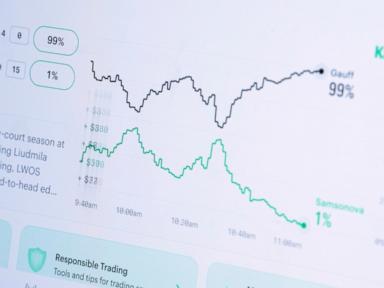
Prediction markets have emerged as a parallel financial system for betting on election outcomes, and trading volume is accelerating as the 2026 midterm elections approach. These platforms allow traders to wager money on political results, creating a new layer of financial incentives embedded in American electoral contests.
The growth of prediction market trading raises a fundamental question about influence. When significant money flows through betting platforms tied to electoral outcomes, those markets themselves can shape perceptions of candidate viability. Early trading patterns can signal momentum or weakness before traditional polling reflects shifts in the electorate. This creates a feedback loop where market signals influence media coverage, donor behavior, and voter psychology.
States are taking aggressive action to restrict these platforms. Officials argue that prediction markets function as unlicensed gambling operations and classify them as casinos operating without proper regulation or consumer protections. Several states have moved to ban or heavily restrict election prediction trading, citing concerns about market manipulation, insider trading on non-public political information, and the normalization of gambling on democratic processes.
The regulatory battle reflects deeper anxieties about how financial markets interact with politics. Prediction markets operate with minimal oversight compared to traditional financial exchanges. Unlike the Securities and Exchange Commission, which regulates stock trading, prediction markets occupy a legal gray zone. Platforms argue they provide valuable information aggregation and price discovery. Critics counter that they represent a form of commodification of democracy itself.
The timing matters. As 2026 approaches, prediction markets have already begun pricing in various scenarios. Early trading can distort perceptions about which candidates are viable. Wealthy traders with strong views about political outcomes can influence market signals that reach journalists, donors, and voters. This creates asymmetric information advantages for those with capital to deploy on prediction markets.
The platforms themselves remain fractured geographically. Some operate openly in certain jurisdictions while facing bans elsewhere. This patchwork regulation means traders shop for jurisdictions where prediction markets operate freely. The lack of uniform rules creates enforcement challenges and allows the platforms to continue operating despite state-level hostility.
Prediction markets have existed for decades in academic settings, but recent platforms have democratized access and dramatically increased trading volume. Mainstream media now regularly cite prediction market odds alongside traditional polling data. This normalization drives more capital into these markets, which further amplifies their influence on political narratives.
The 2026 midterms will test whether prediction markets can function as a meaningful check on political uncertainty or whether they become vehicles for wealthy actors to influence electoral narratives. The outcome depends partly on how many states successfully implement bans before the election cycle intensifies. It also depends on whether prediction markets, through their pricing mechanisms, actually correlate with election results or whether they simply reflect the biases of early traders with capital to deploy.
The regulatory fight between states and prediction market platforms will accelerate in 2025 and 2026. States pushing for bans will argue they protect electoral integrity and prevent gambling on democracy. Platforms will claim they provide valuable market signals and that restrictions violate free speech. That tension will define how Americans interact with political prediction markets during the next election cycle.