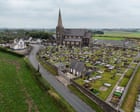
A Northern Ireland high court decision to overturn restrictions on an Orange Order march has revived dormant tensions around Drumcree, a flashpoint that triggered sectarian violence across the region for years. The ruling quashes the latest ban on the Orange Order's annual procession down the Garvaghy Road near Portadown in County Armagh, ending a de facto ceasefire that had held for roughly two decades.
The Drumcree dispute emerged in the 1990s as one of Northern Ireland's most combustible annual rituals. Each summer, Orange Order marchers sought to process down the Garvaghy Road, a Catholic residential area, igniting clashes with police and nationalist residents. Those confrontations cascaded into wider sectarian violence across Northern Ireland, with murders, bombings, and riots following in the wake of standoffs at the Portadown church. The security forces responded with heavy-handed tactics that inflamed both communities.
By the early 2000s, an uneasy understanding took hold. Authorities maintained restrictions on the march route through negotiation and quiet management rather than court order. Orangemen accepted the limits. Nationalists accepted that conflict had become counterproductive. The arrangement held because both sides recognized that renewing the battle served no political or security interest. The march effectively moved around the contested area, preserving Catholic residents' peace while allowing the Orange Order ceremonial space.
The latest high court ruling disrupts that equilibrium. By quashing the restriction on legal grounds rather than allowing it to persist through administrative consent, the judgment opens the door to a renewal of the march down Garvaghy Road. That prospect alarms officials and community leaders who remember the bloodshed. The Orange Order has not rushed to exploit the ruling, but the legal permission now exists.
The political dimensions run deep. The Orange Order occupies a central place in unionist and Protestant identity in Northern Ireland. Its marching season each summer carries symbolic weight tied to historical victories and community pride. Unionists view restrictions on the marches as sectarian discrimination, treating Protestant expression differently than nationalist or Catholic demonstrations. They argue the rule of law demands equal treatment.
Nationalist and Catholic communities, by contrast, see Orange marches through Catholic neighborhoods as provocative sectarian assertion. They view the parades as declarations of dominance in areas where they form majorities. Garvaghy Road residents have opposed the march for decades. To them, being forced to endure annual Orange processions through their neighborhood amounts to state-endorsed sectarian harassment.
The court ruling injects the contentious issue back into mainstream political debate at a time when Northern Ireland's power-sharing executive faces other pressures. The Democratic Unionist Party and Ulster Unionist Party will likely view the judgment as vindicating their position on Orange marching rights. Sinn Fein and the SDLP will see it as a threat to community relations.
Authorities now face a practical dilemma. If they refuse to implement the court's judgment, they face legal challenges and accusations of political interference with the courts. If they permit the march down Garvaghy Road without community consent, they risk reigniting the precisely the sectarian confrontations that have been dormant for twenty years. The narrow path walked for two decades has collapsed. Rebuilding agreement on how to manage Drumcree will require political skill that recent Northern Ireland governance has not consistently demonstrated.