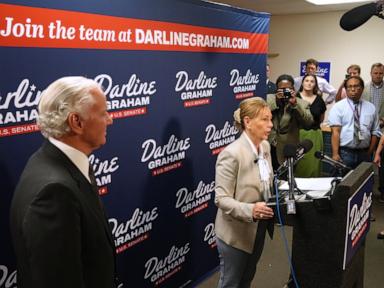
# MAGA Inc. Mobilizes Late Cash for Graham in South Carolina GOP Senate Runoff
MAGA Inc., the super PAC aligned with former President Donald Trump, spent $827,000 on the final day of South Carolina's Republican Senate runoff to support Darline Graham's candidacy. The late spending injection represented a decisive show of force in the contested GOP primary, which pitted Graham against Rep. Ralph Norman in a race to determine South Carolina's Republican nominee for the U.S. Senate special election.
The spending reflected Trump's preference in the race and underscored the outsized influence his political apparatus maintains within Republican primary contests. MAGA Inc. had consistently backed Graham throughout the campaign, but the final-day expenditure demonstrated the organization's willingness to deploy substantial resources when outcomes appeared competitive or uncertain.
Graham's opponent, Rep. Ralph Norman, held strong credentials within South Carolina's conservative establishment. Norman, a congressman representing the state's fifth district, had built a substantial profile in the House and maintained connections to traditional GOP networks. The two-candidate runoff forced South Carolina Republicans to choose between Graham's backing from Trump's political machine and Norman's established congressional record.
The special election itself occurred in the context of vacant Senate seats across the country, with South Carolina facing its own timeline to fill a position. Republican voters in the state confronted a choice between a candidate elevated by Trump's political infrastructure and one rooted in institutional Republican politics.
MAGA Inc.'s spending patterns reflected broader dynamics within the Republican Party. Trump maintained significant influence over GOP primary outcomes through direct endorsements and his aligned super PAC's financial firepower. The organization could deploy capital quickly and efficiently, particularly in closing arguments when voter attention typically peaked. The $827,000 final-day investment represented a bet that late-stage persuasion messaging and media buys would tip the scales in Graham's favor.
Super PACs remain legally independent from candidate campaigns, though alignment with preferred candidates remains transparent and expected. MAGA Inc.'s spending disclosed through Federal Election Commission filings provided a clear record of its priorities and tactical decisions in races across the country.
The South Carolina race tested whether Trump's endorsement and financial backing could overcome an opponent with congressional experience and state-level relationships. Norman's establishment credentials and existing political infrastructure presented a different path to victory than the MAGA-aligned candidate offered. Both candidates attempted to appeal to South Carolina's conservative base, but with different messaging and different organizational backing.
The runoff format ensured that the winner would need to clear a substantial threshold of voter support. This contrasted with primary elections decided by plurality, where vote-splitting among multiple candidates sometimes benefited certain contenders. The head-to-head matchup forced a more direct comparison between the two approaches to Republican politics.
Graham's campaign benefited not only from MAGA Inc.'s direct expenditures but also from the platform and visibility Trump's backing provided. Endorsements from nationally recognized figures carried weight beyond their electoral mechanics, influencing media coverage and donor enthusiasm.
The outcome of this South Carolina runoff would signal the strength of Trump's grip on Republican nominations and the resilience of institutional Republican power structures in primary contests.