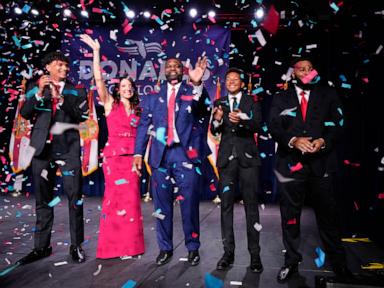
Florida Republicans selected U.S. Representative Byron Donalds as their gubernatorial nominee, bringing the total number of Black major party candidates for governor in 2024 to eight. This milestone reflects a historic shift in American politics, where only three Black governors have won election to the nation's highest state offices in history.
Donalds, a Republican from Florida's 19th Congressional District, represents the party's choice to compete in a state that has become increasingly central to national elections. His nomination signals Republican efforts to expand their coalition beyond traditional bases.
The eight Black nominees across major parties this election cycle substantially exceeds the historical norm. Previous Black governors elected to office include Wiley Ambrose, Tom Bradley in California, and Deval Patrick in Massachusetts. The field this year demonstrates demographic shifts in candidate recruitment and party strategies heading into November.
The Republican and Democratic parties have both fielded Black candidates for governor in multiple states, reflecting changing attitudes toward representation and electability. These candidacies occur against the backdrop of ongoing national conversations about voting rights, criminal justice, and economic opportunity that particularly resonate with Black voters.
Donalds brings congressional experience to Florida's race, one of the nation's most competitive and watched gubernatorial contests. His selection by Florida Republicans indicates the party recognizes the electoral importance of appealing to diverse voters, particularly in a swing state where margins often prove decisive in statewide and federal races.
The presence of eight Black major party candidates for governor represents progress in American politics, though questions remain about whether candidates can convert support into victories. Historical underrepresentation of Black governors reflects both past discrimination and ongoing political dynamics that shape who reaches statewide office. This election cycle tests whether the expanded slate of Black candidates translates into more Black governors winning election, potentially breaking a pattern of extreme underrepresentation at that executive level.