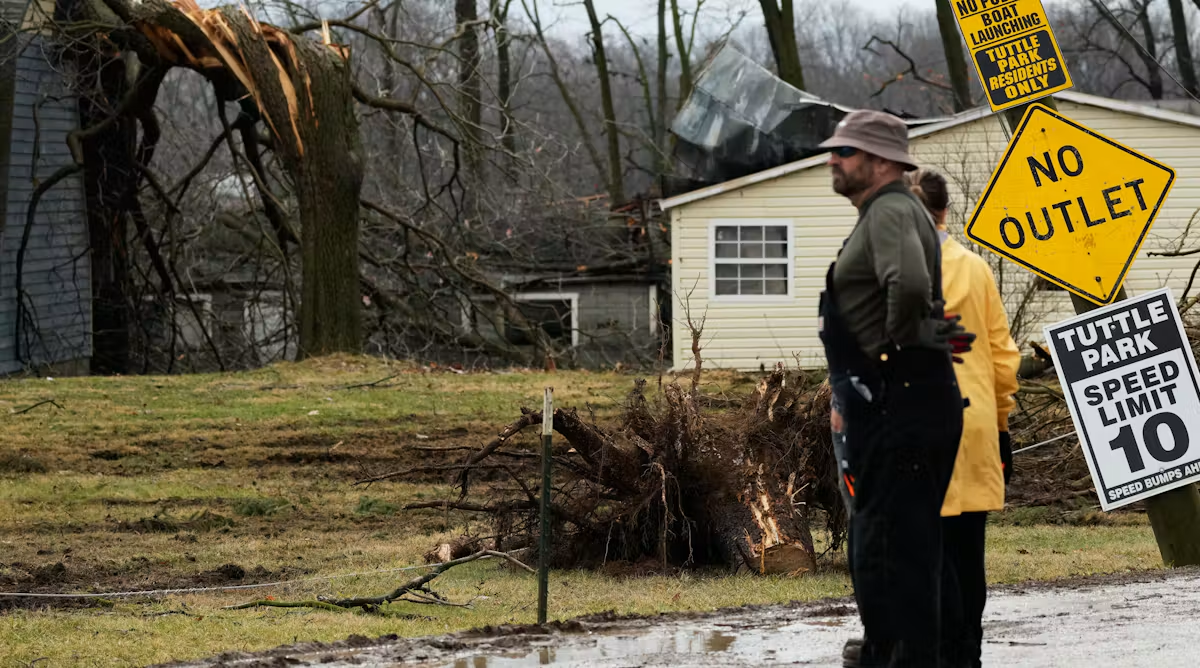
The Trump administration denied 26% of major disaster declarations in 2025, more than double the denial rate from 2024 and well above the 15% average of the past two decades. Governor Gretchen Whitmer of Michigan had her request for federal aid denied twice after four tornadoes killed four people in March 2026.
The denials have followed a political pattern. Trump approved nearly 90% of disaster aid requests from all-Republican states during his second term while approving only 23% from all-Democratic states. Colorado, an all-Democratic state, had both of its 2025 appeals rejected. Those were Colorado's first denials since the 1980s. Florida, an all-Republican state, received $416 million in June 2025 for disaster recovery. Analysis by Andrew Rumbach at the Urban Institute found that about 84% of requests from states Trump won in 2024 were approved compared with about 42% from states he lost.
The White House has denied that politics plays a role in aid decisions.
As federal funding grows less predictable, communities are turning to local institutions to fill gaps. Schools, libraries, churches and community centers are emerging as primary recovery resources. In Union City, Michigan, after the March 2026 tornado killed three people, the local high school became a shelter, volunteers delivered supplies, and a church damaged in the storm opened a disaster relief fund. One local church started a fund to help residents pay insurance deductibles.
Research shows these gathering spaces matter. After Hurricane Katrina, neighborhoods with strong community institutions had better recovery rates. The area around Mary Queen of Vietnam Church in New Orleans saw about 90% of residents return by summer 2007, compared with 45% citywide.
FEMA owes local governments almost $10 billion in reimbursements for recovery work cities have already paid for. When declarations are denied, towns can cover costs as high as 15% of their annual budget.