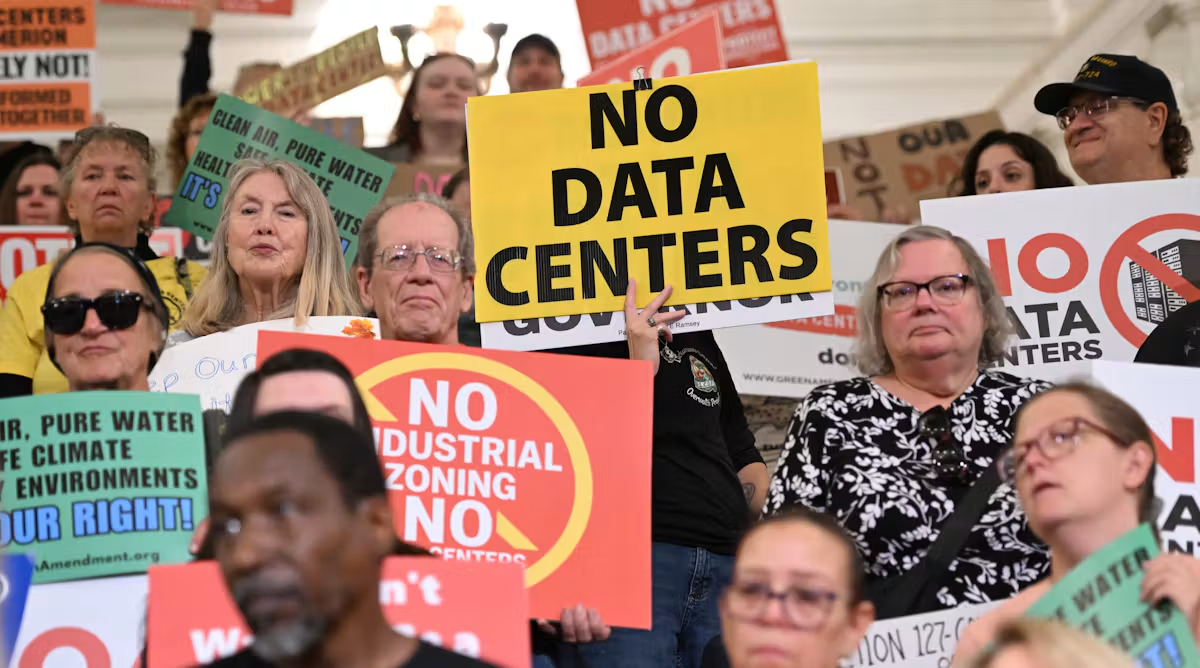
Opposition to data center construction has united Democrats and Republicans in an unusual coalition, from Sen. Bernie Sanders to strategist Steve Bannon. Protests, zoning board meetings, moratoriums, and government actions have disrupted dozens of proposed projects across the nation.
Data centers house computing resources for artificial intelligence and consume enormous amounts of energy. U.S. data center electricity use is projected to reach 12% of total national consumption by 2030. They offer local job creation and tax revenue but carry costs including land use, higher household utility bills, and environmental damage.
Polling from summer 2026 by the Annenberg Public Policy Center found that 69% of Democrats opposed data center construction in their communities, compared with 54% of Republicans. The partisan gap had narrowed from 18 points to 15 points over four months. Both parties showed stronger opposition than support overall.
Majorities of both parties believe AI technology is developing too fast, though Democrats' concern was 22 points higher than Republicans'. Support for government keeping AI under human control and protecting U.S. workers hovered around 80% for both parties, a gap of only 4 points.
Ground-level alliances have formed across party lines. New York's No Data Center FLX organized protests, sued the local zoning board, and collected almost 23,000 petition signatures against a proposed project.
In September, the House passed the Ratepayer Protection Act by 417-3, requiring states to consider adopting a policy making data centers pay for electricity grid upgrades needed to meet their demands. Three progressive representatives voted no, arguing the voluntary structure did not go far enough. The Senate version died, reflecting disagreement among allies over regulatory scope.
President Donald Trump stated that data center opponents want their communities to be "backwards and poor." Republican candidates face pressure balancing constituent concerns against alignment with the president.