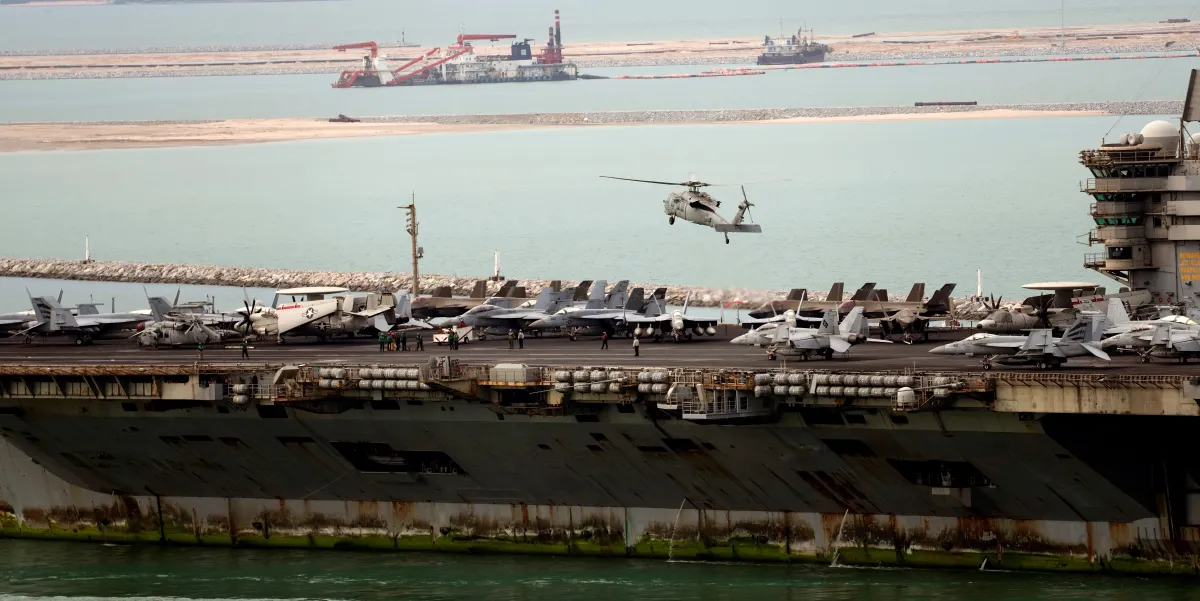
Trump declined to intervene in Saudi Arabia's renewed conflict with Yemen's Ansarullah, or "Helpers of God," signaling what the report calls "the most dramatic American retreat from a region since the U.S. flight from Vietnam in 1975."
The conflict reignited in July 2026 when Saudi Arabia struck Sanaa International Airport to block a Houthi delegation returning from Iran's Ayatollah Ali Khamenei's funeral. Ansarullah forces launched counterattacks and briefly closed Saudi Arabia's airport in October. Pakistan, Turkey, and Egypt pledged to defend Saudi Arabia, but the United States notably abstained.
The report attributes Trump's reluctance to intervene partly to the degradation of American military infrastructure in the region. Iranian strikes during Trump's two wars with Iran damaged or destroyed hundreds of buildings and structures at U.S. bases in Kuwait, Bahrain, Qatar, the United Arab Emirates, Saudi Arabia, Iraq, Oman, and Jordan. The naval base at Manama in Bahrain, headquarters of the Navy's Fifth Fleet, was destroyed. Acting Navy Secretary Hung Cao acknowledged that Iran "blew the hell out of Bahrain." The CIA offices at the U.S. Embassy in Riyadh were annihilated, and Iran struck al-Udeid Air Base in Qatar, rendering the Combined Air Operations Center inoperable.
The Pentagon lost dozens of aircraft during the conflict. Iran's deployment of Shahed drones forced the United States and Israel to deplete interceptor stocks costing $4 million each, while basic Shaheds cost as little as $20,000. The report states the Trump administration may be reluctant to intervene in Yemen partly because "if the U.S. cannot fly missions from al-Udeid, and cannot be sure any new fighter-jet fleets stationed in the region will be safe from Iran, given the paucity of interceptors, the Pentagon will have a limited ability to rescue any U.S. pilots shot down over Yemen."