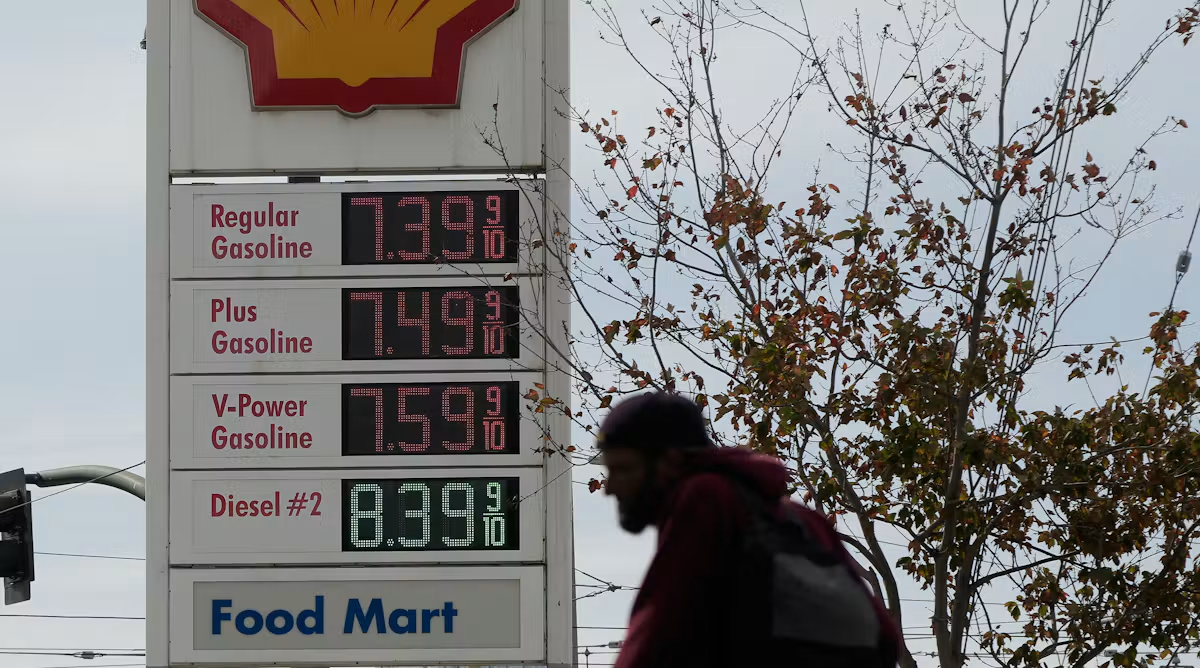
Polling shows Republicans facing headwinds in the November 2026 midterm elections as voters express deep pessimism about the economy, despite strong macroeconomic measures like gross domestic product growth and low unemployment.
A Pew Research survey in early October 2026 found that 84% of registered voters said the economy was very important to their vote. Republicans and Democrats agreed on the issue's priority, with 82% of Republicans and 88% of Democrats ranking it as very important.
The disconnect between economic data and voter sentiment has widened. Consumer sentiment from the University of Michigan index has dropped 10% over the past year even as consumer spending remains robust and business investment stays strong. Inflation has fallen from a 21st-century peak of 9.1% in June 2022 to 3.7% in September 2026, yet consumer sentiment is lower now than when inflation peaked.
Inflation-adjusted wages increased between 2022 and the first half of 2026 but have begun falling in recent months, which may explain darkening voter outlook.
Erin Kay Lockwood, a political science professor at UC Irvine, argues that rising income and wealth inequality better explains voters' malaise. The richest 10% of Americans account for half of all consumer spending today, while spending by the bottom 80% of earners has fallen behind inflation. The top 0.1% of households own five times as much wealth as the bottom 50%.
Lockwood suggests voters may be assessing "the economy" not solely on personal circumstances but on broader concerns about equity and economic justice. Research indicates voters weight their perceptions of overall economic health more heavily than personal finances when deciding whether to support the incumbent party.