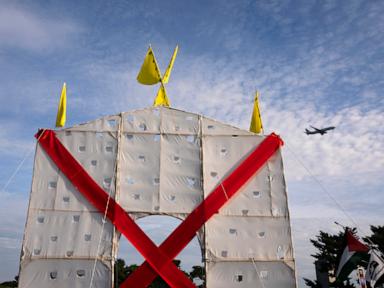
The Association of Flight Attendants union has formally objected to President Donald Trump's plan to construct a triumphal arch near Ronald Reagan Washington National Airport, citing safety hazards for aircraft operations.
The union, which represents roughly 20,000 flight attendants across multiple airlines, submitted concerns to federal aviation authorities about the proposed monument's potential interference with flight paths and approach corridors serving the airport. The structure's height and proximity to runway operations present legitimate risks that could complicate aircraft navigation during takeoff and landing procedures, according to union officials.
Trump announced plans for the arch as part of his vision to create a new symbol in Washington, D.C. The design would celebrate American achievement and Trump's presidency. However, the timing of the project coincides with his second term, placing the proposal directly in the Federal Aviation Administration's regulatory purview.
The Flight Attendants union emphasized that worker safety depends on clear airspace and unobstructed flight operations. Flight crews regularly navigate tight approach corridors at Reagan National, one of the nation's busiest airports, particularly given the airport's location within restricted airspace near the nation's capital. Any structure that could compromise visibility, radar accuracy, or flight path clearance creates operational hazards.
The FAA already operates under strict regulations regarding obstacles near airports. Any new construction requires clearance under Part 77 of the Federal Aviation Regulations, which governs structures that could affect navigable airspace. The agency conducts environmental reviews and safety assessments before approving such projects.
This union objection reflects broader tensions between Trump's ambitious infrastructure vision and practical aviation safety requirements. The administration will need to work with the FAA, airport operators, and affected stakeholders to address these concerns. Modifying the arch's location, reducing its height, or adjusting design specifications could resolve conflicts with flight operations.
The Flight Attendants union has historically advocated for safety standards in the aviation industry. Their formal intervention signals that worker representatives will scrutinize projects affecting operational safety, regardless of their political origins or presidential sponsorship.
Reagan National Airport serves approximately 23 million passengers annually and operates under unique constraints due to its urban location and proximity to restricted airspace. The airport's safety record depends on maintaining clear approach and departure corridors, making the union's concerns substantive rather than merely obstructive.
Trump's administration could pursue the project through alternative designs or locations that satisfy both commemorative ambitions and aviation safety requirements. The FAA review process will ultimately determine whether the proposed arch meets federal standards for structures near airports.
The dispute underscores a recurring challenge in major infrastructure projects: balancing symbolic aspirations with operational realities. Resolving this conflict will require technical expertise, regulatory compliance, and negotiation between Trump's vision and the practical constraints of running one of America's most critical transportation hubs.