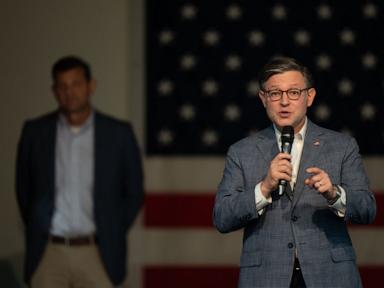
Republicans are pivoting hard toward law-and-order messaging as midterm election campaigns intensify, betting that crime and disorder concerns can offset voter dissatisfaction with their economic record and foreign policy failures.
The strategic shift reflects internal GOP calculations. Polling consistently shows voters blame Democrats for inflation and rising costs. Yet Republicans face their own vulnerabilities on the economy. By emphasizing crime, homelessness, and disorder in Democratic-led cities, Republicans aim to reframe the election around issues where they hold stronger ground with swing voters and suburbanites.
This message resonate especially in competitive House races where Democrats hold narrow majorities. Candidates in purple districts are hammering incumbent Democrats over shoplifting in retail corridors, organized retail theft, and visible homelessness. Crime statistics have become central to campaign advertisements, even where crime rates remain stable or declining.
The approach targets specific urban centers where crime and disorder visibility peak. San Francisco, Los Angeles, Chicago, and other major cities controlled by Democrats face criticism for perceived soft-on-crime policies. Republicans frame this as a choice between law-and-order governance versus progressive permissiveness.
Several Republican candidates are running explicitly as tough-on-crime alternatives. They promise increased police funding, mandatory sentencing enhancements, and stricter bail reform reversal. The messaging appeals directly to suburban voters who shifted left in 2020 but express concerns about neighborhood safety and quality of life.
Democrats counter that Republicans oversimplify complex public safety challenges. They argue that root causes like poverty, addiction, and mental health require comprehensive solutions, not just enforcement. They also note that some crime categories remain lower than historical norms, despite perception-driven narratives.
The geographic divide matters here. Urban voters, particularly minorities in Democratic strongholds, often support both police funding AND criminal justice reform. Suburban swing voters, by contrast, trend heavily toward traditional law-and-order positioning. Republicans target the latter group.
Inflation and the war in Iran remain headwinds for the GOP narrative. Voters continue ranking the economy and cost of living as top concerns. Republicans struggle to explain why inflation accelerated under their policies or why wage growth lags price increases. On foreign policy, tensions with Iran add uncertainty that typically advantages the party not in power.
The crime messaging strategy acknowledges these weaknesses. If Republicans cannot win on economics alone, they hope to construct a broader governing competence argument: Democrats fail on multiple fronts. Crime. Disorder. Economic mismanagement. They paint a portrait of Democratic failure on fundamentals.
Whether this message sticks depends on whether crime remains salient through November. Economic anxiety tends to dominate voter thinking in midterms. Republicans need crime to compete with inflation for voter attention. Their campaign intensity suggests they believe it can.
This represents a traditional Republican playbook from the 1980s and 1990s, dusted off and redeployed. It worked then. Republicans gained ground in elections by positioning themselves as the party of order and consequences. Current campaign investments suggest they believe the strategy remains viable despite changed political demographics and evolving voter priorities.