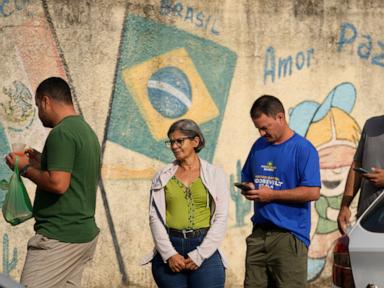
Brazil heads to presidential elections on Sunday with President Luiz Inácio Lula da Silva seeking an unprecedented fourth term. His primary challenger is Senator Flávio Bolsonaro, son of former President Jair Bolsonaro, creating a direct rematch between the leftist incumbent and the political heir of Brazil's far-right former leader.
Lula, the veteran leftist politician who has served as president twice before, aims to extend his influence over Latin America's largest economy. His candidacy represents continuity on social spending, labor policies, and environmental protections in the Amazon. The 78-year-old leader won his previous election in 2022 by a razor-thin margin against Bolsonaro himself, cementing his status as a polarizing figure in Brazilian politics.
Flávio Bolsonaro, 41, represents a generational shift within Brazil's conservative movement. The senator has cultivated his own political base while carrying the Bolsonaro family name and ideology. His campaign draws support from Trump allies and figures in the American Republican Party, signaling how Brazilian politics increasingly intersects with U.S. conservative networks. This alignment reflects broader patterns of transnational right-wing political coordination across the Western Hemisphere.
The election tests whether Lula's social policies and anti-corruption messaging maintain traction with Brazilian voters amid economic pressures. Inflation and unemployment remain concerns for many Brazilians, potentially favoring challengers who promise economic restructuring. Lula's Workers Party has governed through two tenures and now faces voters judging both his record and his vision for Brazil's future.
The electoral mechanics add complexity to Sunday's voting. No candidate needs an absolute majority to win outright. However, if no candidate surpasses 50 percent of valid votes cast, Brazil will hold a runoff election on October 25. This two-round system permits voters to express preferences beyond the top two candidates, though typically narrows to a binary choice in any runoff.
Flávio Bolsonaro's campaign capitalizes on dissatisfaction with Lula's administration while positioning himself as a cleaner alternative to his father. The senator has worked to distance himself from some of Jair Bolsonaro's more divisive rhetoric, though he maintains core conservative positions on fiscal policy, security, and government intervention. His appeal to younger conservative voters suggests the Bolsonaro political brand retains durability despite the former president's term ending in 2022.
The stakes extend beyond Brazil's borders. As the region's largest economy and most populous nation, Brazil's electoral direction shapes Latin American politics broadly. A Lula victory reinforces the leftward trend visible across much of South America in recent years. A Bolsonaro family return signals renewed momentum for right-wing politics regionally, potentially closer alignment with the Trump administration in the United States on trade, environmental, and security matters.
Brazilians will decide Sunday whether to continue Lula's leftist governance or pivot toward Flávio Bolsonaro's conservative alternative. The outcome will reverberate through Latin America and influence Brazil's approach to major global issues from climate policy to economic integration.