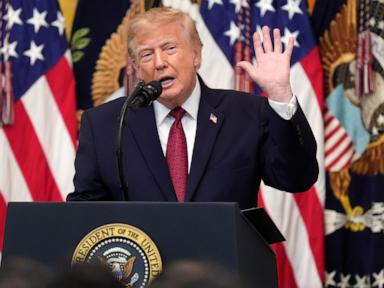
Trump and Vance Campaign in Deep-Red Territory Ahead of Midterms
President Donald Trump and Vice President JD Vance launched coordinated campaign stops in deeply Republican areas, targeting regions where GOP candidates face competitive races despite the party's traditional strength. The dual rally strategy reflects Republican concerns about maintaining House and Senate majorities in November's midterm elections.
Trump appeared at multiple rallies across conservative strongholds, while Vance focused on mobilizing Republican voters in his home state and adjacent regions. Both sought to energize the party base through rallies featuring familiar messaging on border security, inflation, and grievances against the Biden administration. The split-appearance tactic allowed Republicans to maximize reach and consolidate support in areas where the party holds commanding registration advantages but where individual races remain tighter than historical norms suggest.
The campaign blitz occurs against a backdrop of shifting midterm dynamics. While Republicans traditionally gain seats in a sitting president's first midterm, current polling shows races in crucial districts remain competitive. Trump's endorsement remains potent within the Republican primary and general election contests, particularly among voters who turned out heavily for him in 2020. Vance's appearance emphasized Trump-aligned Republican populism to rural and working-class voters.
The strategy carries political calculation. In deep-red districts, the challenge for Republicans involves not winning but rather winning by sufficient margins to flip lean-Democratic seats elsewhere. Turnout operations in safe Republican areas directly impact how many resources candidates must deploy defending their own seats. Higher GOP turnout in conservative counties frees up money and volunteer hours for competitive battlegrounds.
Democratic operatives countered that Republican enthusiasm masks structural vulnerabilities. Inflation's persistence and unpopular Supreme Court decisions on abortion have shifted some suburban independent voters away from Republicans, particularly in purple districts that determine House control.
Trump's midterm involvement represents his most active electoral participation since leaving office. He previously endorsed dozens of Republican candidates in primaries, backing numerous Trump-aligned challengers against traditional Republicans. His presence on the trail signals confidence heading into a cycle where Republicans have historically enjoyed advantages but face demographic headwinds in suburban areas.
Vance's parallel campaign stops reinforced the vice president's role as a bridge between Trump's coalition and broader Republican institutional power. His autobiography "Hillbilly Elegy" and political evolution from critic to Trump loyalist resonated with the working-class voters both candidates targeted.
The midterm environment remains volatile. Gas prices, economic growth data, and foreign policy developments could reshape voter sentiment between now and November. Republicans bank on inflation remaining voters' top concern, while Democrats emphasize abortion access and democracy protection.
Both Trump and Vance proceeded on the assumption that maintaining Republican enthusiasm in safe seats translates to better overall performance nationwide. That tactical calculation will face its first real test when primary voters cast ballots in coming weeks, followed by general election results in November.