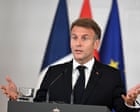
French President Emmanuel Macron has signaled openness to UK rejoining the European Union after Greater Manchester Mayor Andy Burnham floated the possibility publicly. Speaking at a joint press conference with Spanish President Pedro Sánchez in Madrid on Wednesday, Macron responded to Burnham's remarks with an enthusiastic "Welcome back" in English, delivered with a smile.
Burnham, Labour's mayor of Greater Manchester and a prominent voice in the party, had suggested the UK could rejoin the EU or at least reenter a closer relationship through customs union arrangements. His comments represent the first serious political consideration of EU reintegration from a senior British Labour figure since the party's election victory earlier this year under Prime Minister Sir Keir Starmer.
Macron's response carries diplomatic weight. The French leader indicated that UK return to the EU bloc would benefit both Britain and Europe. Speaking in French at the Madrid news conference, Macron appeared to condition any welcome on the British government itself moving toward EU reconciliation, though the full details of his remarks remained incomplete in the initial reporting.
This exchange marks a shift in European attitudes. For years following the 2016 Brexit referendum, EU leaders expressed frustration with Britain's exit. Macron himself had been among the tougher negotiators during Britain's withdrawal agreement talks. The warming of tone suggests European capitals may now view UK rejoin as plausible rather than fantasy politics.
The timing carries significance. The Labour government under Starmer has pursued a more EU-friendly foreign policy than its Conservative predecessor. Labour pledged during the election campaign to improve relations with Brussels and reset the UK-EU relationship, though stopping short of committing to full EU membership during the campaign. Starmer's government has already begun closer cooperation on security and youth mobility agreements.
Burnham's intervention adds grassroots momentum to the debate. As a senior Labour figure outside cabinet, he holds influence within the party's left-leaning base and remains a possible contender for higher office. His willingness to discuss EU rejoin signals the Labour party feels political space opening for serious Europe debate after years of Brexit consensus.
The customs union pathway Burnham mentioned represents a middle option between the current trade arrangement and full EU membership. Such an arrangement would require UK alignment with EU tariffs and regulations on goods, removing the need for border checks but restricting Britain's ability to strike independent trade deals.
Previous Conservative governments flatly rejected any return to European integration. The party's dominant Brexit faction treated EU separation as irreversible, treating rejoin talk as unrealistic. Starmer's government has avoided committing to full membership but signaled pragmatism on cooperation.
Public opinion polling shows British attitudes toward the EU have warmed since 2016. Growing numbers of voters, particularly younger Britons, express regret over the Brexit decision. Economic headwinds and trade friction have eroded support for complete separation among business leaders and economists.
Macron's receptiveness provides the first major European confirmation that UK reentry discussions could advance beyond hypothetical. Whether the Starmer government moves toward Burnham's suggestion remains unclear, but the French president's warm welcome removes a potential barrier to future negotiations. The conversation has shifted from whether the UK might return to the EU, to how and when such a process might unfold.