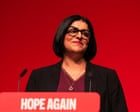
Shabana Mahmood, Labour's Justice Secretary, has framed immigration reform as central to restoring public faith in the UK's political system, arguing that perceived unfairness in current immigration policy drives social fragmentation and political disengagement.
Speaking during parliamentary proceedings, Mahmood stated that Labour aims to build a fairer immigration system as part of its broader governance agenda. She connected immigration policy directly to social cohesion, warning that when people perceive the system as unjust, they "turn inwards" rather than engage constructively with their communities and institutions.
The remarks arrive as the new Labour government, led by Prime Minister Keir Starmer, faces mounting pressure on multiple fronts. Chancellor John Healey vowed in recent statements to maintain strict fiscal rules while framing the upcoming budget as "built on hope," signaling the administration's attempt to balance austerity constraints with public expectations for meaningful change.
Mahmood's emphasis on immigration fairness reflects Labour's attempt to reclaim political ground on an issue traditionally dominated by Conservative framing. For years, the Conservative Party under Rishi Sunak and Liz Truss positioned itself as the party of strict immigration control, using rhetoric about border security and integration. Labour's approach repositions the debate from pure restriction toward systemic equity, attempting to appeal to voters concerned about both immigration levels and the integrity of the asylum and visa systems.
The statement also addresses growing public frustration with what many voters perceive as chaotic or unfair immigration administration. The Home Office has faced repeated criticism over backlogs in asylum processing, visa delays affecting businesses and families, and inconsistent enforcement. By pledging to create "fairness," Mahmood signals Labour's intent to restore administrative competence and public trust simultaneously.
The broader context matters here. Immigration remains a top concern for UK voters across party lines, though responses differ by demographic and region. Leave voters in the 2016 referendum cited immigration as a primary reason for their choice. Labour's electoral coalition now includes both traditional working-class voters in post-industrial areas who harbor concerns about rapid demographic change, and younger, urban, university-educated voters who prioritize immigrant rights and multiculturalism. Mahmood's framing attempts to bridge this divide by emphasizing system fairness rather than volume reduction alone.
Beyond immigration policy, the government confronts other pressing demands. The SDLP's Claire Hanna called for international mediation to resolve a longstanding unionist parade dispute in Northern Ireland near Drumcree, a site scarred by Troubles-era violence. This reflects ongoing governance challenges in Northern Ireland where sectarian tensions periodically flare around symbolic occasions and disputed territory.
The dual focus on immigration fairness and crisis management across multiple policy areas underscores Labour's governing challenge. The party campaigned on restoring trust and competence after 14 years of Conservative rule, which saw numerous scandals, leadership turnovers, and policy reversals. Each statement from senior Labour figures now functions as an attempt to demonstrate seriousness about follow-through on campaign promises.
Mahmood's comments will likely draw scrutiny from multiple directions. Conservative critics will argue Labour remains soft on immigration despite rhetorical emphasis on fairness. Immigration restrictionists within Labour's own coalition will question whether fairness language masks inadequate control measures. Human rights advocates will monitor whether fairness extends to asylum seekers and vulnerable migrants or primarily addresses native-born citizens' concerns.
The test comes in the budget implementation and subsequent legislative action on immigration reform. Words about fairness mean little without concrete policy changes.