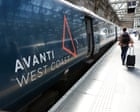
Britain's largest intercity rail operator returns to public ownership this spring as the government executes a major reversal of rail privatization policy. Avanti West Coast will transfer from private management to state control on March 7, 2026, when its franchise contract expires.
The move reflects years of operational failures. Avanti has compiled one of the worst performance records in the British rail system, marked by chronic train delays and cancellations on the critical London-Birmingham-Glasgow corridor. The franchise operator has repeatedly failed to meet service standards despite receiving substantial taxpayer subsidies.
Transport Secretary Andy Burnham, the former Labour mayor of Manchester, hailed the renationalization as essential to restoring reliable service on one of Britain's busiest rail routes. The government plans to operate Avanti directly through the National Railways subsidiary, eliminating the private middleman and keeping passenger revenues within the public sector.
Beyond the immediate takeover, ministers are exploring deeper structural change. They are floating the possibility of public ownership for new rolling stock, a policy shift with profound cost implications. Historically, train operators lease new trains from private manufacturers or leasing companies at substantial expense. Public purchase would allow the government to own assets outright, reducing long-term payments to private firms and building a public asset base.
The renationalization of Avanti reflects broader Labour government policy on railways. Since taking office in July 2024, ministers have signaled intentions to bring all regional rail franchises back into public hands as their contracts expire. Great Western Railway returned to public ownership in October 2024. These moves represent a reversal of three decades of rail privatization that began under Margaret Thatcher's Conservative government in the 1990s.
The financial logic is compelling. Avanti's repeated service failures have damaged the government's credibility while generating costs through compensation claims and subsidy top-ups. Public ownership eliminates the profit extraction that private franchisees demand, directing more resources toward operations and investment. The Treasury expects operational efficiency gains from removing the profit margin paid to private companies.
Rail unions have strongly supported renationalization, viewing public ownership as essential to protecting worker terms and conditions while improving service quality. The RMT and ASLEF unions argue that privatization created perverse incentives that prioritized shareholder returns over passenger service.
Conservative opposition parties have criticized the renationalization as ideological retreat and questioned whether public management can outperform private operators. They argue the government is reverting to failed state-run rail models that preceded privatization. However, comparable public rail systems in France and Germany maintain higher service standards than Britain's privatized network at comparable or lower cost per passenger.
The new trains initiative represents particularly radical change. By shifting from leasing arrangements to public procurement and ownership, the government builds long-term asset value rather than transferring capital to private companies. This approach aligns with Labour's broader industrial policy emphasizing domestic manufacturing and public investment.
Implementation will test government capacity to manage complex rail operations. The Department for Transport must recruit experienced management, establish procurement systems for new rolling stock, and negotiate the transition from private to public control. Early months will prove whether public operation delivers the service improvements ministers promise.