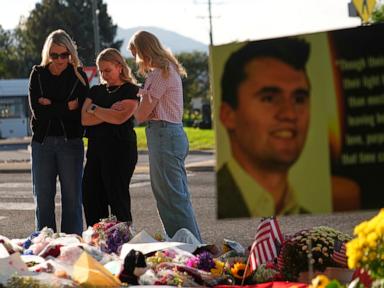
# Security Lapses Preceded Charlie Kirk's Assassination at Utah University
A comprehensive security review released this week documents critical deficiencies in protective measures at the Utah university where conservative activist Charlie Kirk was assassinated last year. The investigation reveals that Kirk's Turning Point USA organization pushed forward with an outdoor speaking event despite explicit security warnings from university officials who flagged vulnerabilities at the venue.
Kirk, a prominent right-wing figure and founder of Turning Point USA, was killed during what authorities have characterized as a targeted attack. The new report provides the first detailed accounting of how security decisions made before the event contributed to circumstances that made the assassination possible.
According to the findings, university security personnel identified specific risks associated with holding Kirk's speech in an outdoor location. These concerns centered on inadequate perimeter control, limited sight lines for protective services, and insufficient barriers between the speaker and surrounding areas. Despite these documented warnings, Turning Point USA leadership opted to maintain the outdoor venue format, prioritizing the optics of the event over the security recommendations provided by trained professionals at the institution.
The report does not specify which Utah university hosted the event, but it details the sequence of communications between university security, event organizers, and Turning Point USA representatives. University officials apparently requested modifications to the setup, including moving the event indoors or implementing enhanced protective barriers. These requests were declined by Kirk's organization.
This revelation casts a sharp light on the tension between event organizers seeking maximum public visibility and security professionals tasked with threat assessment and protection. Universities routinely balance free speech commitments with campus safety obligations. The report suggests that in this case, organizational preferences overrode institutional safety protocols.
The assassination itself generated national attention and sparked broader discussions about political violence and the security of public figures across the ideological spectrum. Kirk had been a polarizing figure in conservative politics, known for his youth-focused activism and aggressive media presence. His death marked a watershed moment in conversations about threat levels facing political activists and commentators.
Security experts consulted on the report emphasized that outdoor venues inherently present elevated risks compared to controlled indoor settings. The inability to manage perimeter access, combined with difficulty vetting attendees in an open environment, creates conditions that amplify vulnerability.
The findings raise questions about liability, institutional responsibility, and the extent to which event organizers must defer to security expertise. Universities face competing interests when hosting controversial speakers. They must accommodate free expression while maintaining duty of care for guests and students.
Turning Point USA has not yet responded publicly to the report's findings. The organization continues its operations under current leadership. Questions remain about whether any policy changes will result from the investigation or whether similar events will incorporate the security measures that were originally recommended for Kirk's appearance.
The report serves as a case study in how procedural failures and organizational decisions can create deadly consequences. It underscores the stakes involved when security professionals raise concerns and those concerns go unheeded.