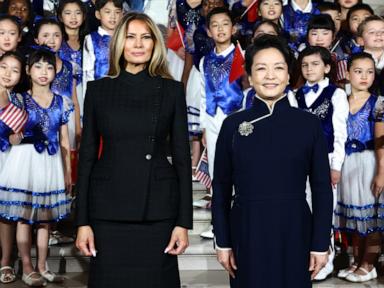
Melania Trump and Peng Liyuan, wife of Chinese President Xi Jinping, toured the Smithsonian's National Museum of Asian Art in Washington, marking a carefully orchestrated diplomatic engagement between the world's two largest economies. The outing carried weight beyond its surface appearance as a cultural excursion, serving as a visible signal of U.S.-China relations at a moment when bilateral tensions run high over trade, technology, and geopolitical competition.
First lady engagements during state visits operate as diplomatic theater. The visit to the Asian Art museum positioned both women as cultural ambassadors, emphasizing shared aesthetic interests and historical connections rather than the trade disputes and strategic rivalry that dominate official negotiations. Such meetings between spouses of world leaders often set a warmer tone for subsequent high-level talks, even when substantive disagreements persist between governments.
Peng Liyuan brings significant cultural credentials to such encounters. As a former Chinese military singer and performing artist, she holds soft power status within China's state apparatus. Her profile contrasts with the more private role traditionally assigned to Chinese first ladies, reflecting Beijing's evolving approach to public diplomacy. The selection of an Asian art museum for the outing underscored cultural affinity and avoided venues that might trigger political controversy.
Melania Trump's role in the engagement reflected the first lady's positioning as a bridge between formal protocol and personal connection. Her selection of venue and activities shapes perceptions of American openness to China, even as the Trump administration pursued aggressive trade policies and tariffs against Chinese goods. The visit demonstrated compartmentalization common in U.S. foreign policy, where personal relationships can coexist with adversarial economic and strategic positions.
The Smithsonian itself carries symbolic weight. As America's premier cultural institution, the museum visit emphasized legitimacy and prestige for the Chinese delegation. The venue choice also highlighted Asian art within American cultural institutions, a statement about inclusion and recognition that resonates in diplomatic messaging.
Visual elements mattered considerably. Photography and media coverage documented both first ladies engaging with artwork and each other, generating images for domestic consumption in both countries. State media in China would frame the encounter as respect for Chinese culture and its first lady. American outlets would analyze fashion choices, body language, and conversational tone for clues about the state of bilateral relations.
The timing of the visit reflected Xi Jinping's broader diplomatic strategy. China seeks to maintain channels of communication and demonstrate reasonableness even as trade tensions escalate. First lady engagement serves this purpose without requiring substantive policy concessions. For the U.S. side, such courtesies maintain diplomatic decorum while the administration pursues its own strategic interests.
State visits by Chinese leaders remain rare and closely managed by both governments. Each element, from venue selection to length of engagement, receives vetting from protocol offices and political advisors. The museum outing represented approved messaging on both sides. It conveyed respect for Chinese culture while avoiding platforms where Peng Liyuan might face questions about political freedoms or human rights records in China.
Subsequent meetings between Trump and Xi would determine whether this cultural gesture translated into substantive negotiation breakthroughs. First lady visits establish atmospherics but cannot resolve fundamental disagreements over tariffs, intellectual property, or regional security. The museum tour functioned as diplomatic prelude rather than solution.