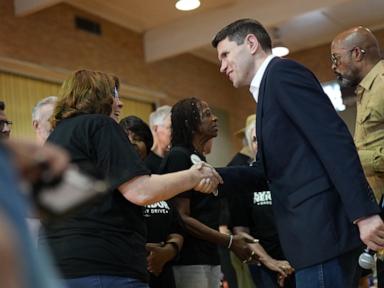
James Talarico, the Democratic nominee for U.S. Senate in Texas, has launched a targeted outreach effort toward Black voters as he mounts his challenge against Republican state Attorney General Ken Paxton. The move reflects a core strategic calculation in one of the nation's most competitive Senate races this cycle.
Talarico, a Texas state representative, recognizes that Black voter turnout and support will determine the margin in a state where Democrats have gained ground but remain in a structural disadvantage in statewide races. Texas Black voters have traditionally favored Democratic candidates, yet turnout fluctuates significantly depending on candidate quality, campaign investment, and broader political enthusiasm.
Paxton, who has held the position of Texas Attorney General since 2015, brings name recognition and the resources of an incumbent officeholder. He faces his own political headwinds. Paxton has dealt with legal scrutiny, including an indictment on securities fraud charges in 2015 that resulted in a mistrial and acquittal in 2024. That history creates an opening for Democratic criticism, though it has not prevented him from maintaining strong support among Republican voters.
The Texas Senate race falls within a narrow window of opportunity for Democrats. While Texas remains a Republican stronghold in statewide elections, demographic shifts and voter registration patterns have narrowed Republican margins. Democrats gained ground in 2018 when Beto O'Rourke nearly defeated Senator Ted Cruz, and again in 2020 when Joe Biden cut into the state's Republican margins. However, Republicans reasserted dominance in 2022, with Governor Greg Abbott defeating Democrat Beto O'Rourke by double digits.
Talarico's focus on Black voters makes tactical sense. Black voters comprise roughly 13 percent of Texas's population but often represent a larger share of Democratic primary and general election voters. Strong Black turnout in Houston, Dallas, Austin, and other urban centers can effectively offset Republican strength in rural and suburban areas. The nominee needs both high turnout among this base and persuasion among swing voters who may not identify strongly with either party.
The Talarico campaign's outreach strategy likely includes direct canvassing, community events, paid advertising in Black-oriented media markets, and partnership with local Black community organizations and churches. Such investments signal that Democrats view this race as genuinely competitive, though statewide Texas races remain structurally favorable to Republicans given current voter registration advantages.
Paxton's campaign will counter with messaging on law and order issues, taxation, and border security. Republicans have invested heavily in messaging to Black voters on economics and crime in recent years, though with mixed results in terms of moving the demographic's vote share.
The race provides a test of whether Democratic messaging and organizing can overcome structural disadvantages in a large red state. Results in Texas influence national narratives about Democratic viability in the South and Southwest. A strong Talarico performance, even in defeat, would signal that Democratic gains in Texas persist. A Paxton landslide would suggest Republican dominance in the state has solidified.