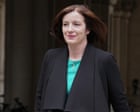
UK Education Secretary Bridget Phillipson has warned that escalating tensions between the United States and Iran will complicate Britain's October budget planning, as Prime Minister Andy Burnham prepares for his first face-to-face meeting with Donald Trump at the UN General Assembly in New York next week.
Phillipson's comments acknowledge the economic headwinds facing the Labour government as it crafts its spending plans. Rising geopolitical tensions typically drive up oil prices and create broader market volatility, both of which ripple through government revenue forecasts and spending requirements. The Middle East conflict adds another layer of uncertainty to an already challenging fiscal environment for Burnham's administration.
The cabinet minister also sought to downplay concerns about the diplomatic relationship between Burnham and Trump. The prime minister has previously made critical statements about the US president, but Phillipson stated she does not expect those past comments to derail talks or damage bilateral relations. Her reassurance reflects the Labour government's desire to reset relations with Trump ahead of the 2024 US election cycle and beyond.
This will mark the first in-person meeting between Burnham and Trump since the prime minister took office. The two leaders have already spoken twice by telephone, suggesting a working relationship exists despite their earlier public disagreements. The UN summit setting provides formal cover for what amounts to a relationship repair mission.
The timing carries political weight. Burnham faces pressure to deliver a budget that balances Labour's spending commitments with fiscal responsibility. Economic forecasts already factor in sluggish growth and persistent inflation. A flare-up in US-Iran hostilities could push oil above $100 per barrel, triggering secondary effects across energy costs, transport expenses, and general price pressures throughout the economy. This would force the Treasury to either raise borrowing forecasts or cut spending plans more aggressively than planned.
The Labour government inherited a fragile economic picture from its Conservative predecessors and has staked its credibility on steady growth and living standards improvements. Any external shock that derails those projections becomes politically damaging. Phillipson's preemptive warning signals the government views Middle East escalation as a real risk, not merely theoretical.
Her comments also serve a diplomatic function. By acknowledging the economic impact while simultaneously downplaying diplomatic friction with Trump, Phillipson positions Britain as a rational actor seeking stable US relations. This messaging matters as Burnham attempts to maintain close ties with Washington while building an independent foreign policy posture.
The October budget announcement represents a defining moment for the Burnham administration. It will reveal how much fiscal room the government actually has for public sector pay raises, NHS funding, and other manifesto commitments. If Middle East tensions drive up commodity costs, that room shrinks considerably.
The upcoming meeting between Burnham and Trump becomes a test of the prime minister's diplomatic skills and his ability to influence US policy directions. Even if Burnham cannot prevent further Iran escalation, demonstrating a functional relationship with Trump signals to markets that Britain can navigate great power tensions without suffering economic isolation or policy exclusion.