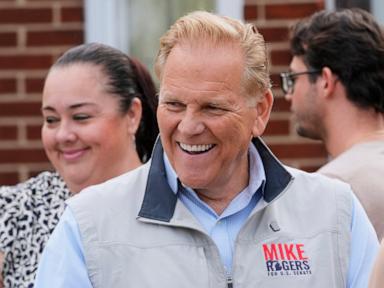
# GOP Nominee Rogers Pursues Unusual Coalition in Michigan Senate Bid
Republican Mike Rogers is running a cross-party campaign in Michigan's open Senate race, targeting both Trump voters and disaffected Democrats as the GOP fights to maintain Senate control. The former congressman and current U.S. Representative from Michigan's 7th district represents an uncommon political positioning that reflects broader Republican strategy in swing states where traditional party loyalty has fractured.
Rogers won the GOP primary in August 2024 with strong backing from Trump, securing the former president's endorsement. Yet his general election pitch extends well beyond the Republican base. He has begun emphasizing economic concerns that resonate across party lines, including inflation, manufacturing job losses, and the costs of living that plague Michigan working families regardless of their voting history.
The Michigan Senate seat opened after Democrat Debbie Stabenow announced her retirement, creating a genuine toss-up race in a state that has become a perennial battleground. Democrats have nominated Representative Elissa Slotkin, a three-term congresswoman from Lansing who also appeals to swing voters and moderates. The seat sits within the broader Republican effort to defend 33 Senate seats while trying to gain ground on the 51-49 Democratic majority.
Rogers represents Michigan's 7th district, which includes portions of Lansing and surrounding areas. His House record includes work on military and cybersecurity issues. The former FBI special agent and Army officer brings law enforcement and intelligence credentials that he projects as steadying in turbulent times.
The strategy of courting Democrats reflects political realities in Michigan. The state contains millions of voters who backed Trump in 2016 or 2020 while also containing suburban and urban areas where Democratic voting has grown. Manufacturing communities across Michigan contain union households and longtime Democratic voters who have shown willingness to split tickets based on economic performance and individual candidate appeals.
Republicans frame Rogers as someone who can work across party lines. They point to his willingness to discuss bipartisan approaches to economic growth, manufacturing support, and job creation. This positioning differs from more ideologically pure conservative candidates who focus exclusively on tax cuts and deregulation.
The Slotkin campaign counters that Rogers represents continuity with Republican policies that harm working families, including tax policies that favor corporations and the wealthy. Democrats argue their candidate better reflects Michigan values on abortion rights, particularly given the state's recent ballot measure protecting abortion access that passed overwhelmingly in 2022.
Control of the Senate hinges partly on performance in states like Michigan where neither party can take victory for granted. Trump's presence atop the ballot in 2024 energizes some Republican voters while potentially alienating others, particularly college-educated suburbanites and moderate women who shifted Democratic in recent cycles. Rogers must thread this needle, maintaining Trump voter enthusiasm while preventing defections to Slotkin among moderates.
The race also reflects broader demographic and cultural shifts in Michigan. Detroit and its surrounding counties have become increasingly diverse and Democratic. Meanwhile, rural and exurban areas have drifted Republican. The margin in suburban counties often determines statewide outcomes.
Both candidates will rely heavily on television advertising, field operations, and voter contact in coming months. The race is expected to be one of the most expensive Senate contests in 2024, with national funding flowing to both campaigns.