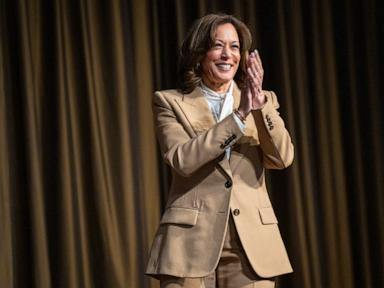
Vice President Kamala Harris plans to campaign in Michigan next week alongside Abdul El-Sayed, the Democratic nominee for the U.S. Senate seat. The visit underscores Harris's effort to energize Democrats in a swing state that remains central to national electoral strategy.
El-Sayed, a former Michigan health department director and progressive activist, secured the Democratic nomination in a competitive primary. His campaign emphasizes healthcare access, labor rights, and economic opportunity for working families. Harris's appearance signals Democratic leadership support for El-Sayed as he seeks to flip or defend the Michigan Senate seat in what promises to be a closely contested race.
Michigan has emerged as one of the most hotly contested battleground states in recent election cycles. The state's diverse electorate, including significant Arab American and union membership populations, makes it a focal point for both major parties. Harris's visit to campaign with El-Sayed reflects the Democratic Party's recognition that Senate control depends heavily on winning in purple states where margins typically run razor-thin.
El-Sayed's political profile appeals to younger and more progressive Democratic voters. His emphasis on healthcare, grounded in his previous role overseeing public health initiatives, resonates with Michigan voters concerned about medical costs and access. The alliance between Harris and El-Sayed combines the gravitational pull of the vice presidency with the grassroots energy of a Senate candidate building momentum in a battleground state.
The timing of Harris's visit carries strategic weight. Campaigns in swing states intensify during the final stretch before Election Day, when candidate appearances and surrogates can influence undecided voters and mobilize core supporters. Harris, as sitting vice president, carries both the authority of the administration and the resources of national Democratic organizations.
El-Sayed faces a Republican opponent in a state where partisan division runs deep. Michigan voters delivered victories to Democrats in 2020 and 2022, yet Senate races often produce different results than presidential contests. Harris's presence on the campaign trail with El-Sayed attempts to build momentum by linking the Senate race to broader Democratic messaging around protecting democracy, economic opportunity, and reproductive rights.
The campaign event also reflects internal Democratic calculation about where vice presidential time and energy should be spent. Harris's schedule emphasizes competitive Senate races where Democratic gains could alter control of the chamber. Michigan's Senate seat represents a genuine opportunity for Democrats to either maintain or expand their chamber majority.
El-Sayed's background as a physician and public health administrator distinguishes him from typical politicians. He brings technical expertise on healthcare policy, an issue polling shows ranks high among Michigan voters. Harris's endorsement of El-Sayed implicitly endorses his policy vision while signaling to Michigan Democrats that the national party views this race as winnable.
The campaign visit demonstrates how Senate races have become increasingly national in scope. Candidates rely on surrogates from Washington, party leaders share resources, and messaging flows through coordinated national structures. Harris's appearance in Michigan transforms a state Senate race into a moment of national political consequence, amplifying El-Sayed's message to a broader audience while strengthening Democratic field operations across the state.