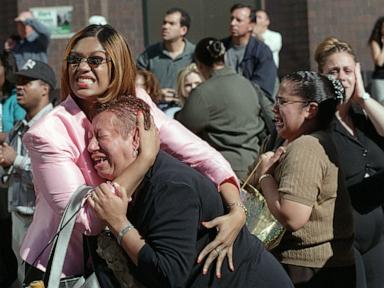
The September 11 terrorist attacks remain a defining national trauma, yet a quarter-century later, Americans process that trauma in starkly different ways. The attacks killed nearly 3,000 people and reshaped U.S. foreign policy, national security infrastructure, and collective identity. Today, as the nation marks the 25th anniversary, the emotional and political meaning of 9/11 has fractured along generational, regional, and ideological lines.
For families who lost loved ones in the attacks, grief persists in forms both public and private. Survivors carry ongoing trauma. First responders face lasting physical ailments and psychological wounds. Yet many younger Americans, born after 2001 or who were small children during the attacks, experience 9/11 differently. For them, the post-9/11 world feels normal. The wars in Iraq and Afghanistan, enhanced security protocols at airports, and expanded surveillance powers constitute their baseline reality rather than radical departures.
The political significance of 9/11 has shifted considerably. In the immediate aftermath, the attacks unified the nation around security concerns and military response. President George W. Bush's approval rating reached 90 percent. The subsequent invasions of Afghanistan and Iraq commanded broad bipartisan support, though that consensus fractured as the wars dragged on and public opinion shifted.
Today, 9/11 carries different political weight depending on one's perspective. Conservatives often invoke the attacks to justify continued military interventionism and robust national security spending. They point to the wars on terrorism as necessary responses to genuine threats. Progressives increasingly question the wars themselves, arguing that the 20-year Afghanistan conflict cost trillions of dollars and achieved limited strategic objectives. Many young progressives view post-9/11 policies, particularly surveillance expansions under the Patriot Act, as governmental overreach that sacrificed civil liberties without proportional security gains.
Geographic proximity also shapes how Americans remember 9/11. New Yorkers experienced the attacks directly. The attacks destroyed iconic buildings, killed thousands in their communities, and transformed the city's skyline. The reconstruction of Lower Manhattan and the 9/11 Memorial and Museum reflect the region's ongoing relationship with that tragedy. Americans in other regions, while affected nationally, lack that visceral local connection.
The passage of 25 years has also enabled historical reassessment. Questions about intelligence failures before the attacks, the conduct of the wars that followed, and the human costs of counterterrorism operations now spark debate rather than consensus. Congressional investigations, journalistic accounts, and declassified documents have complicated the straightforward narrative of justified response to attack.
The Afghanistan withdrawal in 2021 crystallized these tensions. While some Americans welcomed ending a two-decade commitment, others viewed the chaotic evacuation as a betrayal of post-9/11 commitments. Veterans questioned whether their service had achieved lasting objectives. The incident killed 13 American service members and sparked renewed debate about whether the original 9/11 response had accomplished its stated aims.
As Americans commemorate the 25th anniversary, they do so as a more divided nation than in 2001. The attacks remain a defining historical moment, but their meaning varies widely. For some, remembrance centers on loss and resilience. For others, it includes reckoning with wars fought in response to the attacks. The nation grieves together yet apart, united by a shared historical moment but divided on what that moment demands going forward.