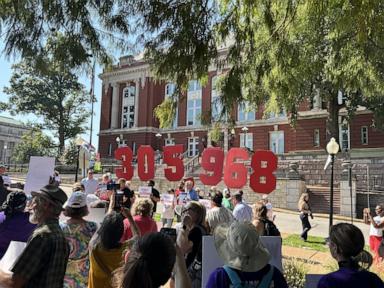
Missouri's Supreme Court blocked a new U.S. House map backed by President Donald Trump, ruling that the redrawn districts cannot be used in the November election without voter approval. The court ordered the map to be submitted for a statewide referendum.
The decision centers on a Republican-controlled redistricting effort in Missouri to redraw congressional boundaries. The new map, which Trump endorsed, would reshape the state's eight U.S. House districts. The state's highest court found that the legislature failed to follow proper procedures when adopting the map and violated state constitutional requirements for voter consent on major redistricting changes.
Missouri's state constitution requires that substantial changes to congressional districts be approved by voters through a ballot measure. The Republican-led legislature attempted to bypass this requirement by passing the map directly. The court rejected this approach, determining that the new boundaries represent the kind of fundamental redistricting change that demands public input.
This ruling represents a significant setback for Missouri Republicans and Trump, who has been actively involved in shaping Republican-friendly maps across the country. Trump previously visited Missouri to campaign for Republican candidates aligned with his priorities, and his endorsement of this specific map underscored its importance to his political agenda heading into the 2024 cycle.
The decision also reflects ongoing tensions in Missouri between the GOP-controlled legislature and the state's judicial branch over redistricting authority. Republicans had sought to use the new map to shore up their dominance in the state's congressional delegation. Missouri currently sends eight House members to Congress, with Republicans holding a 6-2 advantage.
If the map is submitted to voters and approved, it would take effect for the November election. If voters reject it, Missouri would continue using the previous congressional map that has been in place. The referendum adds an unpredictable element to redistricting in the state, as voter preferences on district lines can diverge sharply from legislative intent.
The ruling also carries implications for how other states balance legislative discretion with voter oversight in redistricting. Missouri's constitutional requirement for voter approval on major redistricting shifts stands out compared to many other states, where legislatures typically redraw maps with minimal public input. The court's enforcement of this requirement demonstrates that even in heavily Republican states, constitutional limits on legislative power can restrain partisan map-making efforts.
Redistricting battles have become increasingly contentious in recent election cycles, with both parties investing heavily in controlling state legislatures specifically to influence congressional boundaries. Trump's involvement in Missouri's effort shows how national Republican leadership has prioritized these map-drawing fights alongside candidate recruitment and traditional campaign activities.
The timing of this ruling matters significantly, as the election calendar compresses the window for resolving redistricting disputes. If the referendum proceeds, Missouri voters will decide the composition of their congressional delegation through an unusual direct democratic process rather than leaving the decision solely to elected representatives.