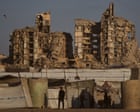
A Gaza refugee living in Glasgow claims the Home Office's rejection of his sister-in-law's visa application resulted in her death from cancer. Anwar, who fled Gaza in 2020 and received UK refugee status in 2021, applied to bring his brother Hassan, Hassan's wife Maryam, and their children to Britain following the October 2023 Hamas attacks and subsequent Israeli military operations in Gaza.
Maryam was diagnosed with cancer before the conflict escalated. Despite her serious medical condition, the Home Office denied the family's visa application. Anwar now believes Maryam would have survived had the UK government approved their entry. She died in Gaza while the family remained stuck in the territory amid widespread destruction and humanitarian collapse.
The case highlights ongoing tensions between Britain's immigration policies and the humanitarian crisis unfolding in Gaza. The Home Office maintains strict criteria for family reunion visas and emergency humanitarian admissions. Officials typically require applicants to demonstrate they face imminent threats to their lives and lack any alternative option before considering accelerated processing. Medical conditions alone do not automatically qualify someone for emergency visa approval under current guidelines.
Anwar's experience reflects a broader pattern. Since October 2023, thousands of Palestinians have sought to reunite with family members already in the UK. The Home Office has processed these applications through standard procedures, which can take months or years. During that time, applicants in Gaza face active conflict, collapsing healthcare infrastructure, and severe shortages of medicine and treatment.
Gaza's healthcare system has deteriorated catastrophically since October 2023. Most hospitals have ceased functioning. Cancer patients lack chemotherapy drugs and radiotherapy equipment. Doctors report treating patients without anesthesia or basic antibiotics. The World Health Organization estimates that disease and lack of medical care could kill more Palestinians than direct violence if the situation persists.
The contrast between Anwar's safety in Glasgow and his family's circumstances in Gaza underscores immigration policy's real consequences. Britain's family reunion rules typically restrict sponsorship to spouses, minor children, and dependent parents. Extended family members face far more restrictive criteria. Even when family ties exist, processing delays mean months or years of waiting.
The Home Office has not publicly commented on Anwar's specific case. A department spokesperson previously stated that immigration decisions balance community cohesion, public services capacity, and border security concerns. They argue that relaxing standards for Gaza would overwhelm UK systems and create perverse incentives.
However, human rights organizations argue the Home Office should establish emergency pathways for Palestinians in active conflict zones, particularly those with serious health conditions. They point to precedents from Afghanistan and Ukraine, where the UK created expedited visa schemes. No comparable arrangement exists for Gaza Palestinians.
Anwar's case will likely fuel debate over whether current immigration policies adequately account for humanitarian emergencies. Critics say the Home Office applies bureaucratic rules inflexibly when lives hang in the balance. Defenders of current policy argue that maintaining consistent standards protects the immigration system's integrity.
The broader question remains unresolved: what responsibility does Britain bear toward relatives of refugees already settled in the UK when those family members face direct threats in conflict zones?