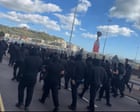
Masked vigilantes linked to far-right networks blocked roads at the Port of Dover in a show of force that politicians and civil rights campaigners warn will repeat unless police enforcement intensifies.
The group, identifying as Patriot Platform, staged the demonstration in black clothing and balaclavas to protest immigration policy. The organization describes itself as driven by a "fierce love for our homeland" but operates within networks known to harbor far-right ideology.
Nick Lowles, founder of Hope Not Hate, the anti-extremism organization, attributed the group's ability to mobilize at scale directly to police inaction. He argued that without stronger law enforcement response, Patriot Platform will feel emboldened to stage additional blockades and demonstrations. This assessment reflects growing concern among civil rights groups that permissive policing of vigilante action creates a vacuum where extremist movements gain operational confidence.
Dover holds particular symbolic weight in British political discourse around immigration. The port city sits at the frontline of national debates over Channel crossings and border management. Far-right groups have repeatedly targeted Dover for protests, viewing the location as emblematic of what they characterize as inadequate immigration enforcement. Patriot Platform's road blockade capitalized on this geography to amplify their message and test the limits of police tolerance.
Local politicians from Dover condemned both the action and the police response. They expressed frustration that residents faced traffic disruption while authorities appeared reluctant to clear the blockade with force. This tension between public order maintenance and protest rights represents a recurring challenge for law enforcement, particularly when dealing with organized groups willing to embrace confrontational tactics.
The incident exposes a strategic calculation by vigilante movements. Groups like Patriot Platform recognize that law enforcement agencies often hesitate to move aggressively against protests framed as civic action, even when they involve obstruction. By maintaining a veneer of patriotic concern rather than explicit violence, such organizations exploit the space between lawful assembly and unlawful obstruction.
Hope Not Hate's analysis points to a pattern. Far-right linked groups have grown more willing to stage public demonstrations when they perceive enforcement will remain mild. The Dover blockade tested this calculation and, by Lowles' assessment, confirmed it. Police neither prevented the action nor swiftly dispersed participants, sending a signal that similar future actions carry manageable consequences.
This dynamic raises questions about policing strategy. Stricter enforcement risks accusations of heavy-handedness or political bias. Permissive approaches invite accusations of favoring far-right groups over other movements. Kent Police's handling of the Dover situation falls into this fraught terrain, where any choice attracts criticism from different corners.
The threat of repetition carries practical weight. Recurring blockades disrupt commerce through one of Britain's major ports, affecting supply chains and economic activity. They also normalize vigilante action as a legitimate form of political expression, potentially inspiring copycat protests elsewhere.
Campaigners now demand that police develop clearer protocols for managing organized obstruction. They argue that treating vigilante blockades the same as spontaneous protests misses the organizational sophistication and intentional disruption involved. Patriot Platform's ability to coordinate masked participants suggests deliberate planning designed to maximize visual impact and media attention while testing police boundaries.
Without intervention, the pattern will likely continue. Patriot Platform and similar groups will stage additional demonstrations at Dover and potentially other strategic locations, each one calibrated to stay within the limits of police tolerance while pushing those limits incrementally further.