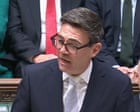
Andy Burnham delivered his first address as Prime Minister to the House of Commons, blaming Brexit for a decade of economic stagnation that has gripped the United Kingdom. The newly appointed Labour leader told parliament he has identified the root causes of Britain's decline and plans to reverse years of underperformance.
Burnham's remarks came during his debut at the dispatch box as PM, a moment that marks the end of the Keir Starmer era. The former Manchester mayor paid tribute to his predecessor, who recently announced his departure from parliament. Starmer's resignation triggered the leadership transition that elevated Burnham to the highest office.
The new Prime Minister's diagnosis centers on Brexit's economic consequences. Since the 2016 referendum and Britain's formal departure from the European Union, the economy has struggled with reduced growth rates compared to peer nations. Burnham's assertion that Brexit caused a "decade of low growth" directly challenges claims made by Brexit supporters who argued the move would unlock economic potential. Instead, the data shows Britain's productivity has lagged competitors, investment has slowed, and trade friction has increased costs for businesses navigating new customs arrangements with the EU.
Burnham's positioning reflects Labour's strategy to move past the Brexit debate and focus voter attention on economic recovery and public services. By naming the problem explicitly, he frames his administration as having clarity about what damaged the country and readiness to chart a different course.
The timing of Burnham's Commons address coincides with significant Conservative Party repositioning. Kemi Badenoch, the Opposition leader, announced a reshuffle of her shadow cabinet, replacing Mel Stride with Andrew Griffith as shadow chancellor. The move signals Badenoch's desire to sharpen her party's economic messaging as it prepares to challenge the new Labour government. Griffith takes responsibility for opposing the government's fiscal plans and articulating Conservative economic alternatives.
Badenoch also replaced Priti Patel as shadow foreign secretary with Tom Tugendhat, a former Conservative minister with military background and foreign policy experience. These changes indicate an effort to rebuild the Conservative frontbench after months of electoral defeat and internal turbulence.
Burnham's elevation to Prime Minister represents a return to regional politics at the national level. His background leading Greater Manchester gives him executive experience managing large populations and complex public services. He brings practical knowledge of devolution, regional development, and local governance to Downing Street.
The Commons address established Burnham's governing narrative: the previous decade under Conservative rule and through much of Labour's prior administration created economic damage that requires systematic repair. Rather than radical departures, he emphasizes diagnosis and structured reform. His government will likely focus on rebuilding business confidence, addressing the structural problems created by Brexit adjustment, and improving productivity across regions beyond London and the Southeast.
The contrast between Burnham's focus on long-term economic problems and Badenoch's personnel reshuffles reflects two parties recalibrating after major political transitions. Labour now owns both the diagnosis of Britain's difficulties and responsibility for solving them. The Conservatives must develop credible alternatives while managing their own internal renewal after electoral defeat.