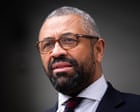
James Cleverly launched his campaign for London mayor as the Conservative Party's leading candidate, positioning himself as a champion of classical conservative governance while sidestepping the culture war rhetoric that has defined Kemi Badenoch's leadership of the party.
The senior Tory made his pitch in a series of Sunday interviews on LBC radio, attacking incumbent Mayor Sadiq Khan and Labour's Andy Burnham. Cleverly claimed Khan has "lost passion for the job" and dismissed Burnham as "very anti-London," attempting to frame himself as the serious alternative London voters need.
Cleverly denied speculation that his departure from Badenoch's shadow cabinet was motivated by disagreement over the party's rightward cultural direction. Yet his campaign strategy reveals a deliberate distance from those battles. In his public interviews, he conspicuously avoided engaging with culture war topics that Badenoch has championed, instead focusing on what the Conservatives traditionally call bread-and-butter issues like economic management and public services.
This tactical choice reflects a broader calculation within Conservative circles. While Badenoch has pushed the party toward more aggressive stances on gender, immigration, and social issues, Cleverly appears to believe that winning London requires a different approach. The capital's electorate leans heavily toward progressive values. A mayoral candidate steeped in Badenoch's cultural agenda could face steep headwinds among London's voters, particularly in inner-city constituencies.
Cleverly framed his candidacy as more than a local election. He suggested that his victory in London would serve as a springboard for Badenoch's path to Downing Street. This framing inverts the typical hierarchy. Rather than positioning the London mayoralty as a secondary office beneath national politics, Cleverly cast it as central to Conservative revival. A Conservative win in London, which has voted Labour in mayoral elections since 2016, would reshape the national political landscape and demonstrate that the Tories can compete in urban centers.
The backdrop to Cleverly's announcement involves significant Conservative Party turbulence. Badenoch took over the leadership with a mandate to move the party rightward and reclaim ground on cultural issues. Some senior Conservatives have questioned whether this strategy works everywhere. London presents a test case. Khan secured his third term as mayor in 2024 with 55 percent of the vote in a city where the Conservative candidate received just 28 percent of votes cast.
Cleverly's decision to run a "classically Conservative campaign" signals an intentional separation from that recent losing strategy. Classical conservatism, in the British context, typically emphasizes fiscal discipline, property rights, and institutional stability rather than social conservatism. This positioning allows Cleverly to present himself as orthodox and serious without triggering the cultural polarization that Badenoch's leadership has intensified.
The timing matters as well. General election speculation continues to swirl, with the next general election due by January 2026. A mayoral election campaign gives Cleverly a high-profile platform to rebuild his national standing after leaving the shadow cabinet. Whether his strategy of running away from culture wars while his party embraces them proves viable remains an open question. London voters will provide the first answer.