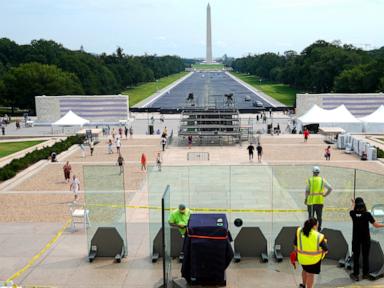
Thousands of protesters gathered on the National Mall to demand federal action on voting rights and racial justice as the midterm election approaches. Civil rights organizations coordinated the demonstration to pressure Congress and the Biden administration to advance stalled voting legislation before voters head to the polls.
The rally reflects growing frustration among Democrats and civil rights advocates over the failure to pass comprehensive voting rights reform. The John Lewis Voting Rights Act and the Freedom to Vote Act have languished in the Senate, blocked by Republican opposition and the absence of Democratic unity on eliminating the filibuster. Democrats control the chamber but lack the 60 votes needed to overcome a Republican filibuster without changing Senate rules.
Voting rights emerged as a central issue in the 2020 presidential campaign. President Joe Biden made restoration of the Voting Rights Act a priority after the Supreme Court gutted Section 5 in 2013, which had required certain states with histories of discrimination to seek federal approval before changing voting procedures. Since that ruling, Republican-controlled legislatures have enacted stricter voter ID laws, reduced early voting periods, and limited mail-in ballot access, actions that civil rights groups argue disproportionately affect Black voters and other minorities.
The demonstrations underscore the wedge dividing Democrats on tactics. Progressive members want Biden to invoke executive authority more aggressively, while moderates including Senator Joe Manchin of West Virginia have resisted eliminating the filibuster, arguing it protects minority rights in the Senate itself. Manchin voted against the voting rights bills, effectively dooming their passage in the current Congress.
Republicans counter that proposed voting legislation undermines election integrity and usurps state authority over elections. They argue that states, not the federal government, should set voting rules. GOP legislators have framed stricter voting requirements as necessary safeguards against fraud, despite minimal evidence of widespread voter fraud in recent elections.
The midterms loom as high stakes for voting rights policy. If Republicans gain control of the House or Senate, prospects for federal voting legislation essentially disappear for two years. Conversely, if Democrats retain or expand their majorities, they could attempt filibuster reform or pass narrower voting bills with greater consensus.
The timing of the rally reflects the urgency civil rights groups feel. Early voting begins in several states soon, and Election Day arrives in November. Organizers hope sustained pressure can push Democratic leaders toward action on the filibuster or inspire higher turnout among voters motivated by voting access concerns.
Biden has called voting rights "the soul of democracy" but has faced criticism for not deploying the full weight of his office to achieve reform. Civil rights leaders argue that without federal action, Republican-led states will continue restricting ballot access heading into 2024.
The National Mall demonstration represents one of the largest voting rights actions since the 1960s Civil Rights Movement, signaling the issue's centrality to contemporary Democratic politics and the ongoing battle over electoral access in America.