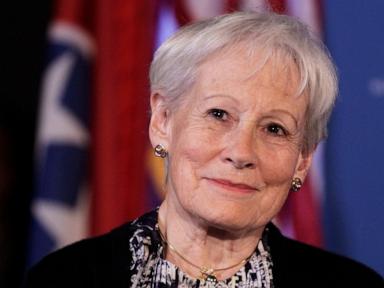
Nancy Kassebaum Baker, who represented Kansas in the U.S. Senate for 18 years and broke significant ground as a Republican woman in elected office, died at 94. Her death marks the loss of one of the most prominent female politicians of the late 20th century.
Kassebaum Baker served in the Senate from 1978 to 1997, becoming only the second woman elected to the chamber in her own right, not through appointment or succession. She won five consecutive elections, building a reputation for independence from her party and a focus on constituent service. Her tenure spanned from the final years of the Cold War through the early post-Soviet period, during which she shaped foreign policy debates and defense spending priorities.
Born Nancy Landon Kassebaum in Topeka, Kansas, in 1932, she inherited a political legacy. Her father, Alf Landon, served as Kansas governor and ran as the Republican presidential nominee in 1936. Her family wealth and established standing in Kansas politics provided a foundation, but Kassebaum Baker built her own political identity distinct from her father's legacy.
Her election to the Senate in 1978 surprised political observers at a time when women held only one Senate seat. Kassebaum Baker positioned herself as a moderate Republican willing to break ranks on votes she believed served Kansas interests or aligned with her conscience. She supported the Panama Canal Treaty despite initial Republican opposition. She championed women's rights and reproductive healthcare access, stances that occasionally put her at odds with the Republican Party's conservative wing.
In the Senate, Kassebaum Baker chaired the Labor and Human Resources Committee during her final years in office, granting her influence over healthcare policy and education legislation. She authored the Kassebaum-Kennedy Act of 1996, landmark health insurance reform that protected coverage for workers changing jobs and expanded mental health benefits. The legislation passed with bipartisan support and became one of her most enduring legislative achievements.
Her voting record reflected a pragmatic conservatism rooted in Kansas values rather than ideological rigidity. She opposed excessive military spending when she believed it wasteful, supported environmental protection measures, and backed campaign finance reform. These positions sometimes aligned with Democratic colleagues, complicating simple party-line categorization of her Senate work.
Kassebaum Baker retired from the Senate in 1997 after deciding not to seek a sixth term. She cited family obligations and a desire to pursue other interests. After leaving office, she remained a respected voice in Kansas politics and national Republican circles, though she stepped back from daily political engagement.
Her path to the Senate opened doors for other Republican women, though progress in women's Senate representation remained slow for decades after her retirement. Female Republicans point to her career as proof that women could win statewide elections and exercise substantial legislative power in chambers long dominated by men.
Her death removes a bridge figure in American politics, someone who demonstrated that Republican women could succeed without conforming to partisan orthodoxy and that regional interests sometimes superseded national party demands.