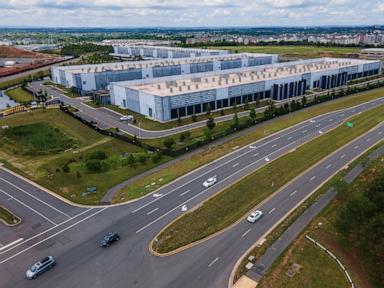
Nearly 200 activists aligned with Robert F. Kennedy Jr.'s "Make America Healthy Again" movement have called on President Donald Trump to abandon plans promoting coal as a power source for artificial intelligence data centers, creating tension within Trump's political coalition.
The MAHA activists view the coal promotion strategy as fundamentally at odds with environmental health goals that define Kennedy's public health advocacy. Their letter comes as Trump has signaled openness to reviving coal infrastructure to meet the soaring electricity demands of AI operations, particularly data centers that consume massive amounts of power.
Kennedy, now leading a health-focused advocacy group within Trump's orbit, built his political brand partly on environmental concerns and skepticism of polluting energy sources. His supporters argue that promoting coal contradicts the movement's stated mission to restore public health and environmental integrity.
The policy conflict reflects deeper tensions in Trump's energy agenda. The president has long championed fossil fuels as central to American energy independence and economic growth. The surge in AI development and deployment has created genuine infrastructure challenges: data centers require continuous, reliable power sources. Trump's team views coal as a domestic resource that can address this need while supporting coal industry jobs, particularly in Appalachia and the Midwest.
However, MAHA activists contend that promoting coal to power AI infrastructure prioritizes corporate tech interests over public health. They argue that renewable energy sources could meet data center power needs without the respiratory and environmental costs associated with coal combustion. The activists also point to coal's contribution to climate change, which they frame as a public health issue affecting vulnerable populations.
The disagreement exposes fissures in the Trump-Kennedy alliance. Kennedy joined Trump's circle with expectations of influence over environmental and health policy. Yet Trump's traditional support for coal extraction and use has remained consistent across his political career. The gap between Kennedy's environmental advocacy and Trump's energy priorities was always apparent, but the AI data center question brings it into sharp relief.
Data centers supporting artificial intelligence have emerged as a critical infrastructure need. Tech companies like OpenAI, Google, and Microsoft are racing to build or secure power sources for expanding AI capabilities. These operations consume electricity equivalent to small cities. Trump sees coal as a readily available, domestically sourced solution that creates jobs and supports an industry he has long defended.
The coal-for-AI-data-centers position also complicates Trump's relationship with environmental constituencies. While Trump holds limited support from green voters, promoting coal to power corporate tech infrastructure may alienate some moderate Republicans and independents who favor energy diversification.
The MAHA activists' letter signals that Kennedy retains independent leverage within the movement, even as a Trump appointee. Their action tests whether Kennedy can redirect Trump administration policy on environmental grounds or whether Trump's core energy commitments will override health-focused objections.
The dispute remains relatively contained within Republican and pro-Trump circles, but it highlights how AI's infrastructure demands are forcing energy policy conversations that pit traditional fossil fuel industries against both renewable advocates and health-conscious constituencies. Resolution of this tension will shape Trump's energy strategy for his term.