# ICE Deportation Flights to Iran Raise Questions About Regime Coordination
Immigration and Customs Enforcement coordinated with the Iranian government to arrange deportation flights while the Trump administration pursued hostile foreign policy toward Tehran. Internal emails obtained by The Intercept reveal ICE agents complied with specific Iranian requests to return certain nationals, creating an unusual diplomatic arrangement between agencies normally at odds with Iran's clerical leadership.
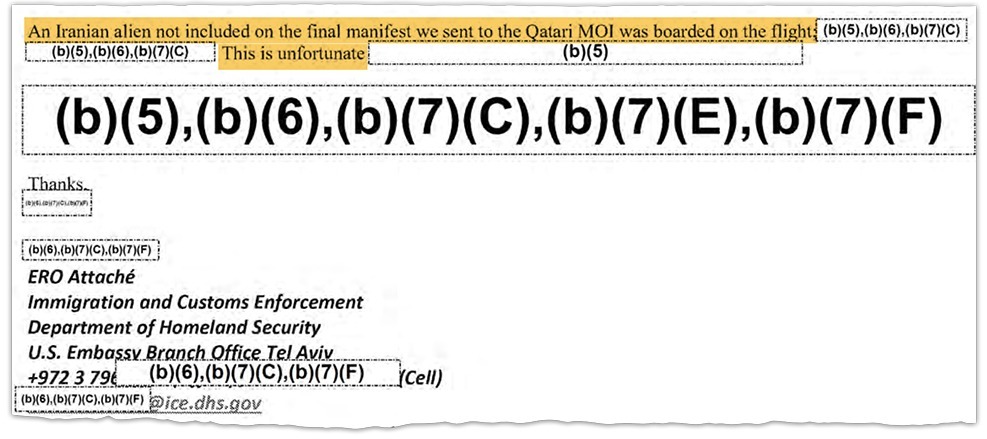
The coordination carried operational risks. ICE accidentally deported the wrong individual to Iran in at least one instance, according to the documents. This error underscores the complexity of managing deportations to a nation the U.S. designates as a state sponsor of terrorism and with which it maintains no formal diplomatic relations.
The timing compounds the tension. These deportation flights occurred as the Trump administration developed military and economic strategies targeting Iran's nuclear program and regional influence. Working simultaneously with Iranian officials on deportations while planning confrontation creates a contradictory posture in statecraft.
The arrangement raises questions about how ICE balanced enforcement priorities with foreign policy. Immigration enforcement typically operates separately from diplomatic channels, yet these emails document direct coordination between American immigration officials and representatives of a hostile regime. The specificity of Iranian requests suggests Iran targeted particular individuals for return, potentially for political or security reasons unknown to American officials.
The accidental deportation reveals another concern. When managing cases involving Iranian nationals, the stakes involve both immigration law and potential political consequences. Deporting the wrong person to Iran could create diplomatic incidents or endanger individuals with no connection to the initial request.
These operations highlight the tension between two competing U.S. objectives. Deporting Iranian nationals serves domestic immigration enforcement goals. Yet coordinating with Tehran undermines the adversarial posture the administration adopted in foreign policy. The emails suggest these operations continued despite the broader strategic conflict, demonstrating how bureaucratic processes sometimes operate independently of stated policy direction.
The documents raise