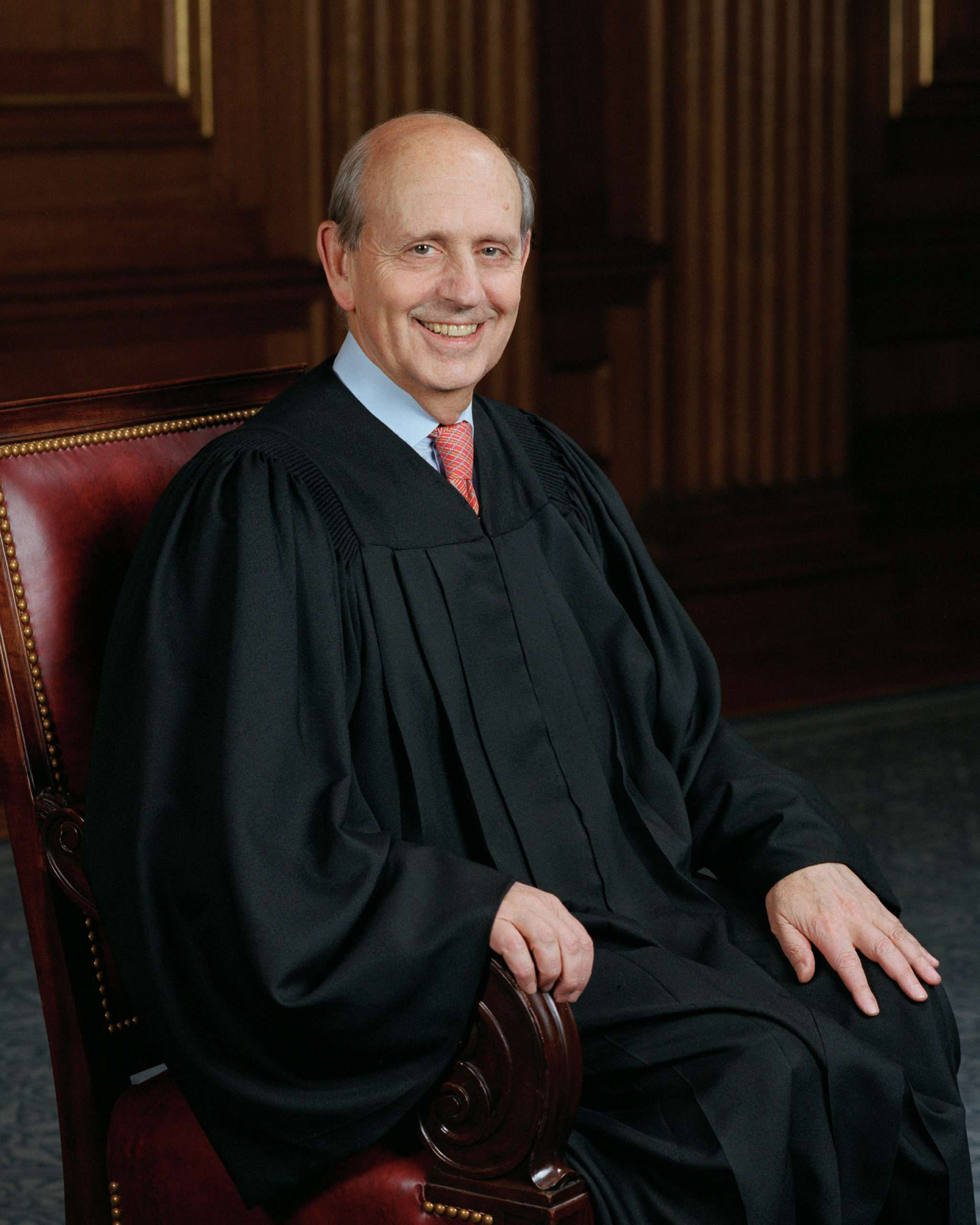
Justice Stephen Breyer was born on August 15, 1938. The Harvard Law School graduate would go on to serve nearly three decades on the Supreme Court after President Bill Clinton appointed him in 1994.
Breyer became known during his tenure for pragmatic, moderate positions on constitutional law. He authored majority opinions in cases involving First Amendment protections, voting rights, and administrative law. His dissents often emphasized the real-world consequences of judicial decisions and questioned rigid constitutional interpretations that ignored practical outcomes.
Before his Supreme Court appointment, Breyer served as a judge on the U.S. Court of Appeals for the First Circuit and as chief counsel to the Senate Judiciary Committee. His background in administrative law and economics shaped his judicial philosophy, particularly in cases involving regulatory agencies and statutory interpretation.
Breyer retired from the Court in June 2022, after the Biden administration and Senate Democrats worked to replace him before a potential Republican takeover of the Senate. Justice Ketanji Brown Jackson succeeded him, becoming the first Black woman to serve on the Court.
During his 28 years on the bench, Breyer participated in decisions on healthcare reform, gun rights, and presidential power. He frequently sided with the Court's liberal wing but occasionally joined conservative justices on specific issues. His opinions reflected his belief that judges should consider practical governance questions alongside abstract legal principles.
Breyer's retirement marked a transition point for the Court's ideological balance, tilting it further to the right as the three most recent appointees were nominated by President Donald Trump.