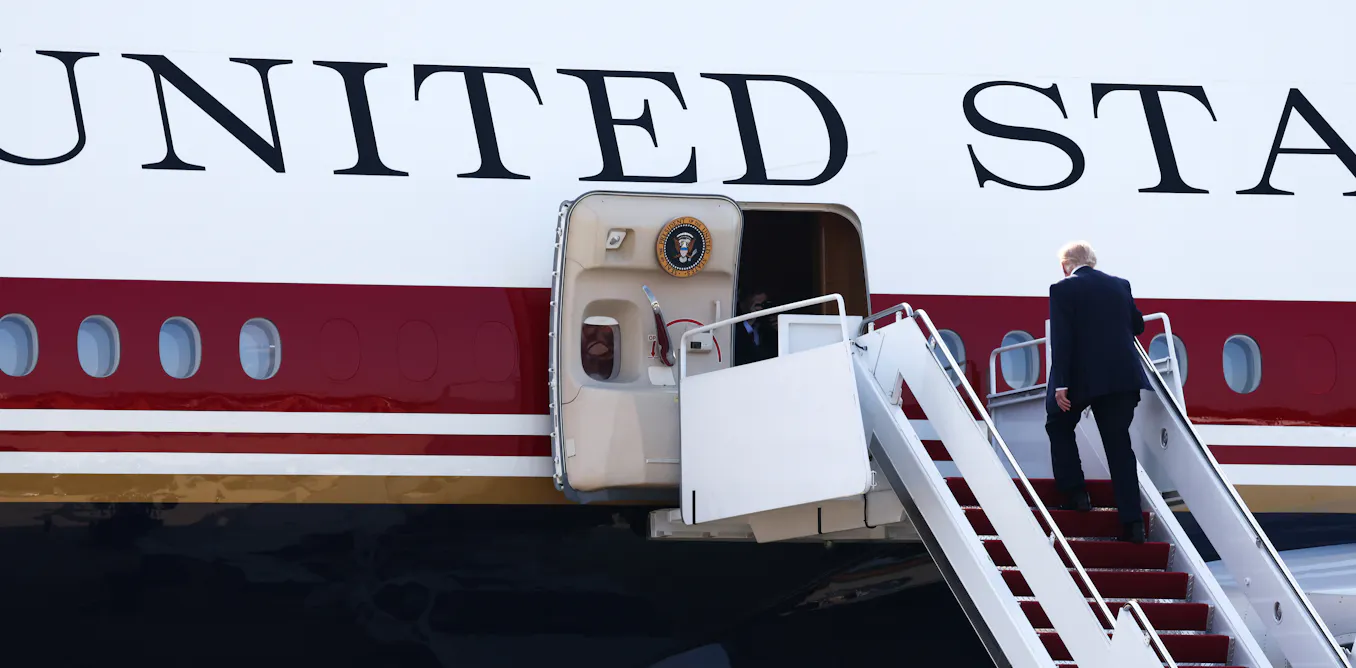
Air Force One functions as far more than a presidential conveyance. The aircraft has fundamentally transformed how American presidents exercise power, conduct diplomacy, and project authority on the world stage.
Historians argue that the plane's capabilities have reshaped the operational structure of the presidency itself. Before reliable presidential air transport, chief executives remained largely bound to Washington or nearby locations. The airplane liberated presidents from geographic constraints, enabling them to travel rapidly across the nation and globe. This mobility redefined executive governance.
The aircraft became a symbol of American power and technological superiority. When presidents land in foreign nations aboard Air Force One, the plane itself communicates authority and national strength. Diplomatic negotiations now occur aboard the aircraft or immediately after presidential arrivals, with the plane's presence underscoring America's reach and resources.
The plane also created new operational frameworks for governing. Presidents can now conduct cabinet meetings, sign legislation, and make critical decisions while traveling. The aircraft functions as a flying White House, equipped with communication systems, secure facilities, and staff infrastructure that allow continuous governance during flight. This capability fundamentally altered how presidents manage their time and responsibilities.
Security considerations around Air Force One have shaped presidential movements and public appearances. The aircraft's protection requirements influence how presidents interact with citizens and conduct their daily business. Paradoxically, while the plane expands presidential mobility, its security needs can restrict spontaneous public engagement.
The aircraft has also become a political flashpoint. Debates over Air Force One's costs, maintenance, and replacement reflect broader tensions about executive spending and presidential perquisites. Recent discussions about acquiring new aircraft have sparked congressional scrutiny and public debate about the proper scope of presidential resources.
Air Force One represents the evolution of the modern presidency itself. The plane enabled presidents to think nationally and internationally in real time, moving power out of fixed locations into the air. This transformation continues shaping how American presidents govern and lead.