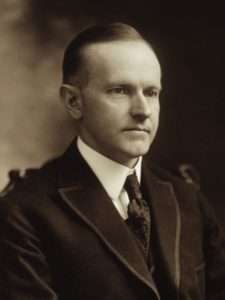
President Calvin Coolidge took the oath of office on August 2, 1923, following Warren Harding's death in office. Coolidge would go on to shape the Supreme Court through his judicial appointments, most notably Justice Harlan Fiske Stone.
Stone's appointment reflected Coolidge's judicial philosophy during the 1920s. The conservative president sought justices who would resist the progressive regulatory agenda that had gained momentum under earlier administrations. Stone, a former law professor and Attorney General under Harding, brought substantial legal credentials to the bench.
Stone's tenure proved consequential for American constitutional law. Though initially aligned with the Court's conservative bloc, he evolved into a defender of civil liberties and First Amendment protections. His famous "Carolene Products footnote" in a 1938 case became foundational to modern constitutional analysis, suggesting heightened scrutiny for laws affecting fundamental rights and minority groups.
Coolidge's presidency coincided with the Court's Lochner era, when justices struck down economic regulations as violating liberty of contract under the Due Process Clause. The Coolidge administration reflected the pro-business sentiment of the 1920s. Stone's appointment aligned with this preference, yet his judicial independence would later distinguish him as one of the more influential justices of his generation.
Stone would serve until his death in 1946, becoming Chief Justice in 1941. His legacy extended beyond Coolidge's tenure, helping establish jurisprudential principles that governed constitutional interpretation for decades. The appointment demonstrated how presidential choices shape the Court's direction across generations, with Stone's intellectual influence persisting long after the Coolidge administration ended.