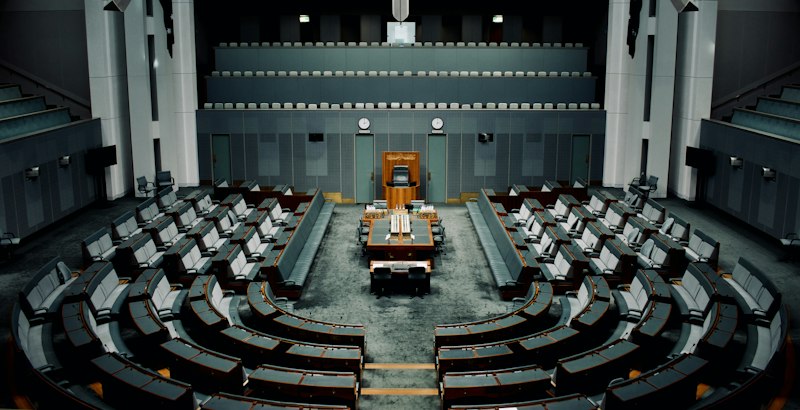
There's an unpopular take buried in the chaos of contemporary Washington: restraint, not speed, may be the smarter strategy here. I don't mean restraint in the sense of inaction. I mean the radical notion that our government institutions might benefit from occasionally waiting 48 hours before responding to the latest provocation, claim, or crisis.
We've become addicted to the immediate response. A controversial appointment gets announced before breakfast. By lunch, opposing senators are issuing statements. By dinner, cable news has constructed elaborate narratives about what it all means. By the next morning, everyone's locked into their position and we're already moving to the next outrage.
This cycle has real consequences. When you're always operating in emergency mode, every decision looks like a five-alarm fire. Every appointment becomes existential. Every policy proposal becomes a harbinger of doom or salvation. The constant escalation exhausts both the public and the institutions themselves.
Look at how we've handled contentious administrative appointments and policy directions in recent years. The pattern is predictable: announcement, immediate opposition or support crystallizes, narratives harden, then we're stuck. There's no room for actual deliberation because everyone's already committed to their position in a public way. Backing down looks like weakness. Compromise looks like betrayal. So we careen forward.
The real damage isn't to any particular policy outcome. It's to the institutions themselves. Congress was designed, however imperfectly, to be a deliberative body. That doesn't mean slow-moving or ineffective. It means thoughtful. It means you actually read the thing before you denounce it. It means you consider counter-arguments instead of just waiting for your opponent's response so you can preemptively attack it.
We've also lost the ability to distinguish between genuinely concerning developments and standard partisan theater. When everything is treated as an existential threat, nothing is. The boy who cried wolf had a point.
Some of the most consequential moments in recent American history involved people taking time to understand what they were actually dealing with before responding. That's not always possible in genuine emergencies. But most of what passes for crisis in Washington isn't actually time-sensitive. Nobody dies if we spend a week actually examining a proposal instead of issuing statements within the hour.
I'm not arguing for passivity. I'm arguing that there's a difference between swift and thoughtful action, and the reflexive, defensive crouch that characterizes modern governance.
The media environment makes this harder. There's no profit in "we're going to take three days to formulate a substantive response." The incentive structure rewards speed and emotional intensity. Politicians feed this because immediate responses keep them in the news cycle. It's a mutually reinforcing feedback loop.
But someone has to break it. Ideally, it's the institutions themselves, recognizing that their legitimacy depends on being seen as more than just another interest group fighting for advantage.
This doesn't require agreement across party lines. It just requires acknowledging that there's value in thinking before reacting. That understanding something fully is better than understanding it quickly. That not every move needs to be countered within the hour.
The next person or institution that models this behavior, that takes time to genuinely consider before responding, will seem almost radical. That's how broken our baseline has become.
But that person or institution will also be harder to dismiss, easier to take seriously, and ultimately more influential. Restraint, it turns out, can be a form of strength.