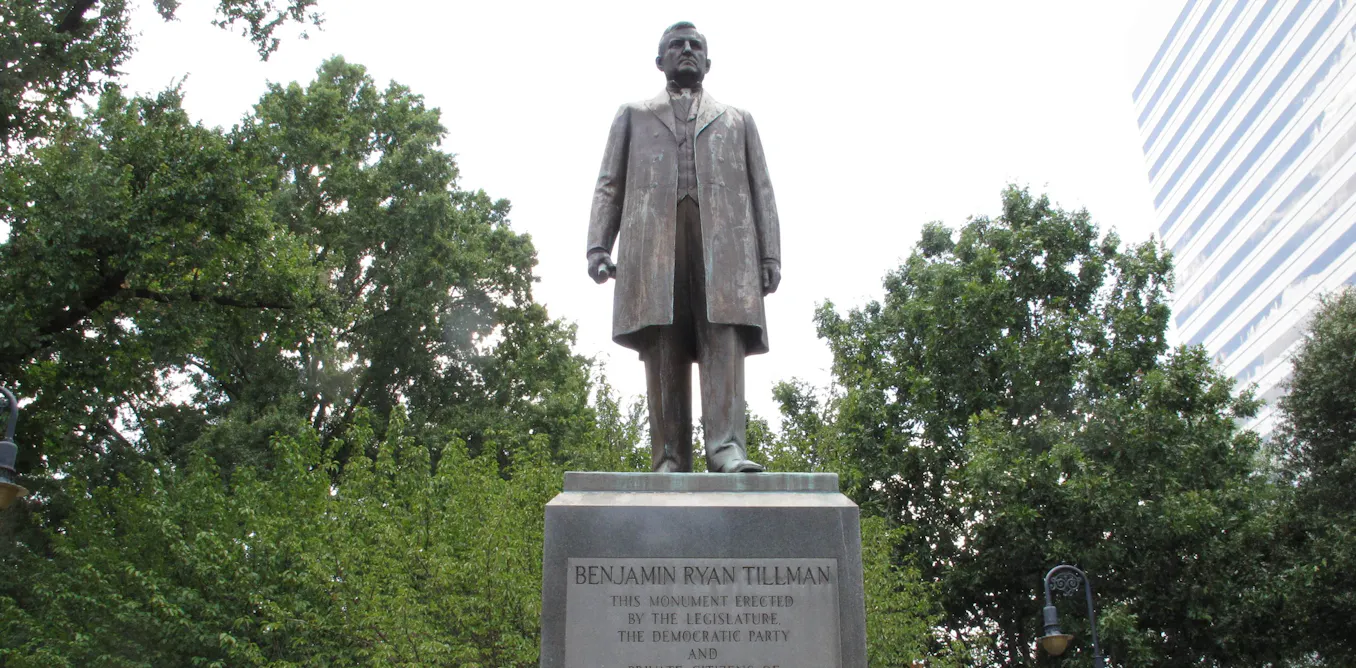
The 1876 Hamburg Massacre in Aiken County, South Carolina exemplifies how racial violence became the foundation for political power in the post-Reconstruction South. White mobs murdered dozens of Black militia members and civilians, transforming the state's political landscape through terror rather than democracy.
The attack occurred as Republican control of South Carolina faced challenge from the Democratic Party's campaign of intimidation. White Democrats organized paramilitary groups to suppress Black voters and Republican officeholders. The Hamburg attack served as a turning point, emboldening similar violence across the state that would ultimately restore Democratic white supremacy.
None of the perpetrators faced prosecution. Instead, many rose to prominence. State officials and federal authorities declined to pursue justice, allowing the massacre's architects to consolidate power. The perpetrators became state senators, governors, and judges. They faced no consequences for orchestrating mass murder.
This pattern repeated across the Reconstruction-era South. Violence preceded Democratic victories in elections. Terrorism replaced ballots as the mechanism for political change. Black citizens who voted faced death. Republican politicians received threats. Violence became a tool of electoral strategy.
The Hamburg Massacre reversed the trajectory of Black political participation in South Carolina. Before the attack, Black voters controlled significant electoral power. After 1876, Democratic white supremacists implemented Jim Crow restrictions that disenfranchised Black citizens for nearly a century. The massacre demonstrated that Americans could commit atrocities against fellow citizens and advance politically as a result.
This history shapes contemporary politics. The perpetrators of 1876 established a precedent where racial violence could yield political rewards without legal consequences. South Carolina's political system was built on this foundation. The men who murdered Black citizens became the architects of state governance. Their unpunished crimes established white Democratic dominance through 1964.
The absence of accountability for the Hamburg Massacre left a structural legacy. Political leaders who used racial terror to gain