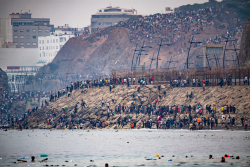
Spain experienced a significant surge in irregular border crossings yesterday, with approximately 50,000 migrants crossing into Spanish territory. The incident occurred in the disputed territory around Ceuta, Spain's North African enclave bordering Morocco.
The crossing reflects escalating tensions between Spain and Morocco over migration policy and border enforcement. Morocco has periodically allowed migrants to cross into Spanish territories as leverage in diplomatic disputes with Madrid. Spanish authorities deployed security forces to manage the influx, though the sheer volume of migrants overwhelmed initial containment efforts.
This event lands amid broader European debates over asylum policy and border security. The European Union faces persistent criticism from right-wing parties across the continent, who argue that liberal immigration policies have weakened member states' capacity to control their frontiers. Spain's Socialist government has defended its asylum procedures while calling for stronger EU coordination on migration management.
The incident exposes contradictions in European governance. Critics argue that while EU institutions strictly regulate member states' speech and social policies, enforcement of external borders remains inconsistent and ineffective. Conservative parties and nationalist movements use such episodes to argue for tougher immigration controls and question Brussels' competence on security matters.
Spanish Prime Minister Pedro Sánchez's government faces domestic political pressure from the right-wing Vox party and the opposition People's Party, both demanding stricter border policies. International cooperation with Morocco, a key transit country for migrants from sub-Saharan Africa and the Middle East, remains central to Spain's migration strategy.
The crossing also highlights geopolitical complexities in North Africa. Spain's relationship with Morocco involves competition over territorial claims, fishing rights, and regional influence. Migration surges often correlate with diplomatic friction, making border security inseparable from foreign relations.
European policymakers will likely use this incident to justify calls for strengthened border technology and capacity at member states' external frontiers. The event underscores ongoing tensions between humanitarian obligations