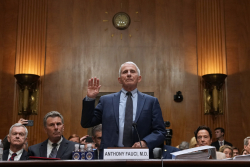
Anthony Fauci invoked his Fifth Amendment right against self-incrimination during a Senate hearing this week, a move that Republican lawmakers and conservative commentators seized on as damaging to his credibility. The longtime director of the National Institute of Allergy and Infectious Diseases declined to answer questions, citing potential legal exposure.
The hearing centered on Fauci's role during the COVID-19 pandemic and the origins of the virus. Republican senators have pursued aggressive lines of questioning about his communications with health officials, gain-of-function research funding, and his public statements regarding masking and lockdowns.
Fauci's decision to invoke the Fifth, typically associated with criminal defendants protecting themselves from prosecution, contrasts sharply with his previous public testimony before Congress. Earlier hearings saw him answer questions directly, defending his pandemic response decisions and scientific guidance.
Adding to the controversy, references to Fauci's personal diary entries have surfaced. These documents contain notes about pandemic discussions and decisions. Republicans have used diary excerpts to challenge Fauci's public statements, arguing discrepancies exist between his private communications and public health guidance.
Conservative media has characterized the combination of his Fifth Amendment invocation and diary revelations as evidence of inconsistency or misconduct. Supporters counter that invoking constitutional protections is a legitimate legal strategy when facing hostile questioning, and that selective diary excerpts may distort context.
The hearing highlights ongoing Republican scrutiny of the pandemic response. Fauci, who became a polarizing public figure during COVID-19, has faced criticism from the right for mask recommendations and his role in evaluating pandemic origins research. His department faces continued congressional investigation into its funding decisions and communications.
Fauci has announced plans to step down from his position, though the timing of that transition remains fluid. His congressional appearance this week suggests the political reckoning over pandemic decisions continues, with