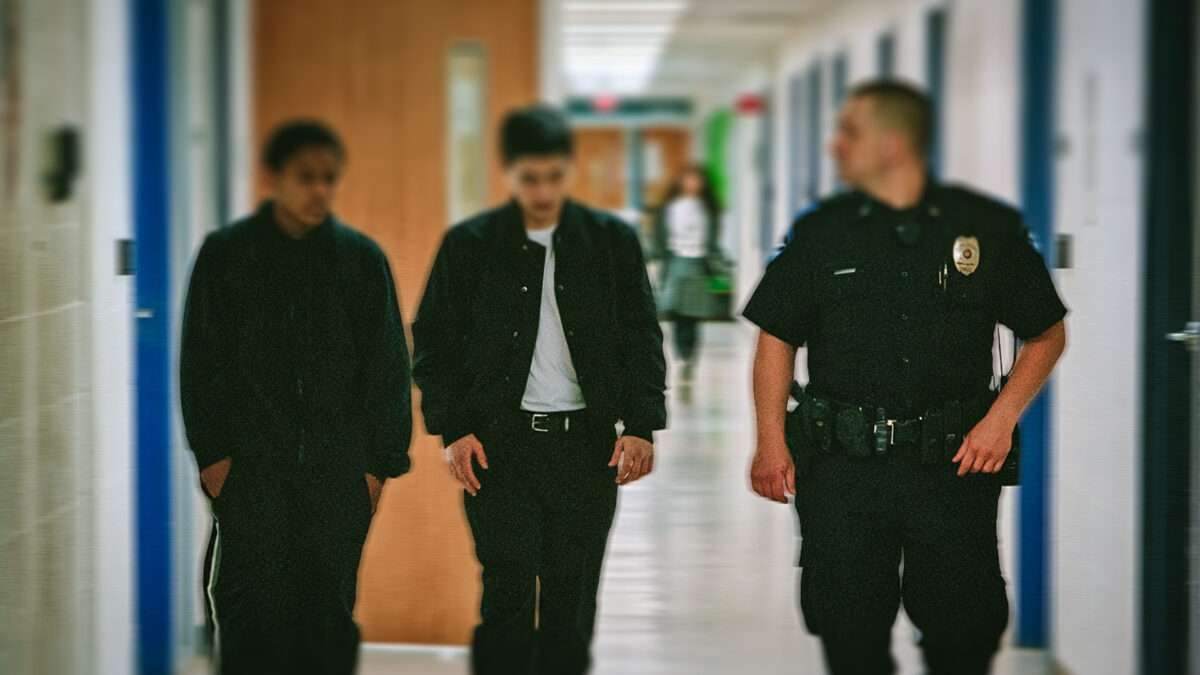
The American Civil Liberties Union of Iowa released a report documenting how police presence in schools has intensified discipline for minor infractions while creating stark racial and disability disparities in enforcement.
The report found that Black students and disabled students face disproportionate police referrals and arrests for school disciplinary matters. The ACLU examined data across Iowa school districts and identified patterns where officers escalate minor behavioral issues into criminal matters rather than allowing schools to handle them through standard discipline procedures.
This practice creates a pipeline effect. Students arrested for low-level offenses face criminal records that damage their educational trajectories and employment prospects. The report shows these consequences fall hardest on marginalized student populations, deepening existing inequities in the criminal justice system.
Iowa school districts have increasingly stationed police officers in buildings, ostensibly for safety purposes. However, the ACLU's findings suggest this approach redirects school discipline toward criminalization. Black students receive police referrals at rates exceeding their school enrollment percentages. Disabled students, particularly those with emotional and behavioral disabilities, experience similar disproportionate treatment.
The timing matters. School-based police involvement has expanded nationally following high-profile school shootings. Districts justified officer placements as security measures. Yet the Iowa data reveals these officers primarily respond to typical adolescent behavior.offenses like talking back to teachers, fights, or truancy become police matters rather than administrative ones.
This pattern reflects broader debates about school safety and criminal justice reform. Advocates argue police in schools criminalize poverty, disability, and youth while doing little to prevent serious violence. School officials counter that officer presence deters serious threats and provides rapid emergency response.
The ACLU report adds empirical weight to arguments for removing police from schools. It demonstrates that the stated purpose of enhanced safety conflicts with the actual outcome of expanded criminalization targeting vulnerable populations. For Iowa policymakers, the findings present a choice between maintaining