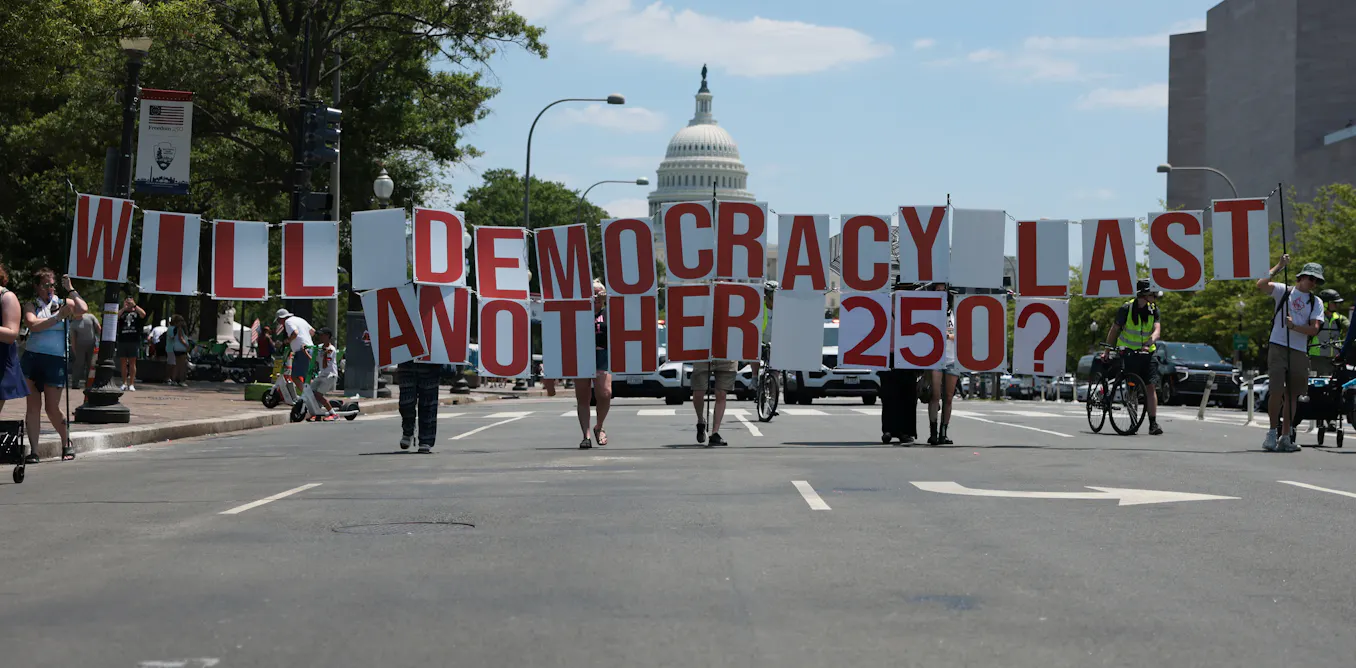
A significant portion of the American public displays troubling apathy toward threats to democratic institutions, according to polling data highlighted in this analysis. While direct support for violating democratic norms remains confined to a small minority, a far larger segment expresses indifference when politicians undermine democratic safeguards.
This phenomenon, termed "democratic neutrality," presents a distinct danger to the stability of American governance. Voters who remain neutral on democracy's erosion create political space for actors willing to test institutional boundaries. Without public pushback, democratic norms weaken through gradual degradation rather than dramatic collapse.
The distinction matters. Active opposition to democratic violations differs sharply from passive acceptance. A voter who opposes election fraud operates as a check on electoral manipulation. A voter neutral on the question provides no brake on such behavior. Politicians facing neutral electorates calculate that violations carry minimal electoral cost.
Historical precedents demonstrate this pattern across democracies worldwide. Democratic backsliding typically advances through incremental steps that each appear defensible in isolation. Citizens who neither strongly support nor oppose these moves enable their accumulation.
The underlying cause often stems from partisan polarization. Voters prioritize partisan victory over institutional health. They accept or overlook norm violations by favored candidates while condemning identical behavior from opponents. This selective application of democratic standards erodes the shared commitment to rules that transcends party affiliation.
Addressing democratic neutrality requires rebuilding civic understanding of democracy's fragility. Citizens must recognize that democratic norms function as mutual agreements. When majorities stop enforcing them against preferred politicians, minorities lose protection. Once norms collapse, no institutional safeguards prevent majoritarian dominance.
Current debates over judicial independence, voting access, and executive power all reflect this dynamic. Partisan actors exploit voter indifference to reshape institutions. Rebuilding democratic resilience depends on cultivating active support for democratic norms across party lines, not merely opposition