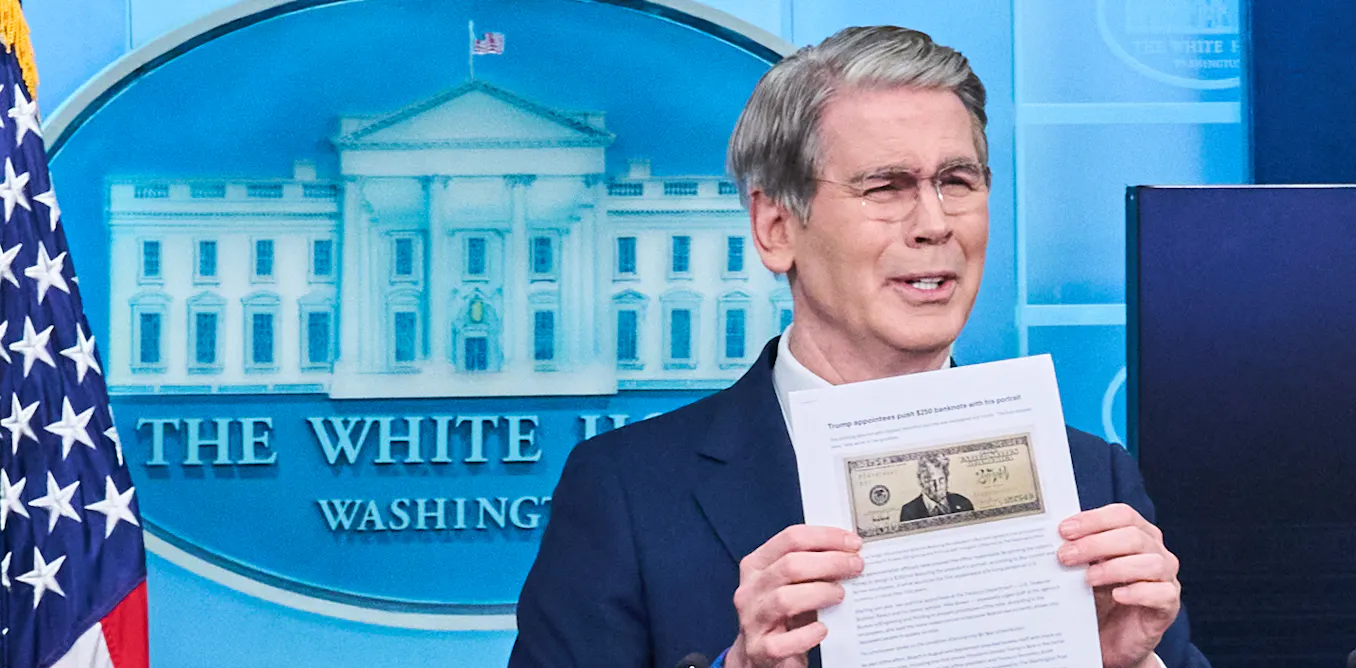
Former President Donald Trump recently suggested placing his image on U.S. currency while still alive, a proposal that would break with American tradition and place the nation alongside monarchies and authoritarian regimes.
A professor of international relations examined over 1,000 banknotes and coins worldwide and found that nearly all feature sitting leaders who hold their positions through hereditary rule. Kings and queens dominate global currency imagery. The United States has historically avoided this practice, reserving currency honors for deceased presidents or founders.
The U.S. standard reflects the republic's founding principles. No sitting president has appeared on American currency during their lifetime. The practice of placing living political figures on money typically occurs in nations with monarchical systems or concentrated executive power, where the leader serves as a permanent head of state.
Trump's proposal diverges sharply from American precedent. U.S. currency features presidents only after they leave office or die. George Washington appears on the dollar bill, but he was not alive when his image was first printed. This separation between the sitting executive and currency imagery serves democratic purposes, preventing the executive branch from using monetary systems for personal promotion or propaganda.
The comparison to global monarchies underscores the democratic concern. Nations that place living leaders on currency often use the practice to reinforce political authority and permanence in power. The United States deliberately avoided this consolidation of symbolic power.
Federal law prohibits placing any living person's image on U.S. currency, making Trump's suggestion legally impossible without congressional action. Changing this requirement would require legislation and represent a fundamental departure from American constitutional practice.
The contrast between American tradition and global monarchy practices illustrates how currency design reflects political systems. Democratic nations generally separate sitting leaders from monetary symbols. Monarchies and autocracies treat currency as an extension of state power and the sovereign's authority.