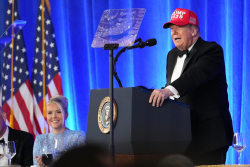
Donald Trump returned to the White House Correspondent's Dinner for the first time since his presidency, marking a notable shift in the former president's relationship with the media establishment. Trump's attendance signals a departure from his previous practice of boycotting the annual event, which traditionally brings together journalists, politicians, and entertainment figures.
The dinner, held annually since 1921, has historically served as a venue for ribald humor and political satire. Trump's initial absence from these gatherings reflected his contentious relationship with the press, which he frequently branded as "fake news" during his tenure. His decision to attend now suggests either a strategic recalibration or a confidence in his political standing ahead of potential 2024 campaign considerations.
Trump's comments about making the experience "even better" the second time hinted at his competitive nature and desire to reshape the narrative around his public image. The former president's presence at the dinner drew significant media attention, underscoring his continued relevance in American politics despite leaving office in January 2021.
The dinner appearance carries political weight beyond the ceremonial aspects. Trump's willingness to engage with journalists and comedy performers in this setting represents a tactical choice to demonstrate resilience and comfort before the media apparatus. His attendance also provided him a platform to reach multiple audiences simultaneously, including those who follow the event's coverage and social media reaction.
The dinner remained a battleground of sorts, with Trump's appearance prompting reactions across the political spectrum. Supporters viewed his attendance as a bold statement, while critics remained skeptical of his motivations. Regardless of interpretation, Trump's return to the correspondent's dinner underscored his continued dominance of political discourse and his ability to command attention through high-profile appearances.